Sculptra Treatment
Procedure Length
Recovery Time
Results Visible
Cost Range
In This Guide
Last updated: 18 October 2026
Key Benefits of Sculptra Treatment
Gradual, natural results: Because your skin is doing the work itself, improvements build slowly over weeks and months rather than appearing overnight. The result looks like your face at its best, not like a treated face
Long-lasting collagen stimulation: Results from a completed course typically last two years or more, making Sculptra one of the longest-lasting non-surgical treatments available
Structural volume restoration: Sculptra works on the deeper layers where volume loss actually starts, rebuilding the underlying structure of the face rather than sitting on top of it
Treats face, neck and body: Used across the cheeks, temples and jawline as its primary treatment areas, and also for neck rejuvenation and non-surgical buttock enhancement
No overfilled appearance: The volume you gain is collagen your body has made itself, so it looks and moves naturally. There is no gel sitting under the skin
Minimal downtime: Most patients are back to normal activity within 24 to 48 hours. Any redness or mild swelling at the injection sites settles within a few days
Sculptra Treatment: Overview
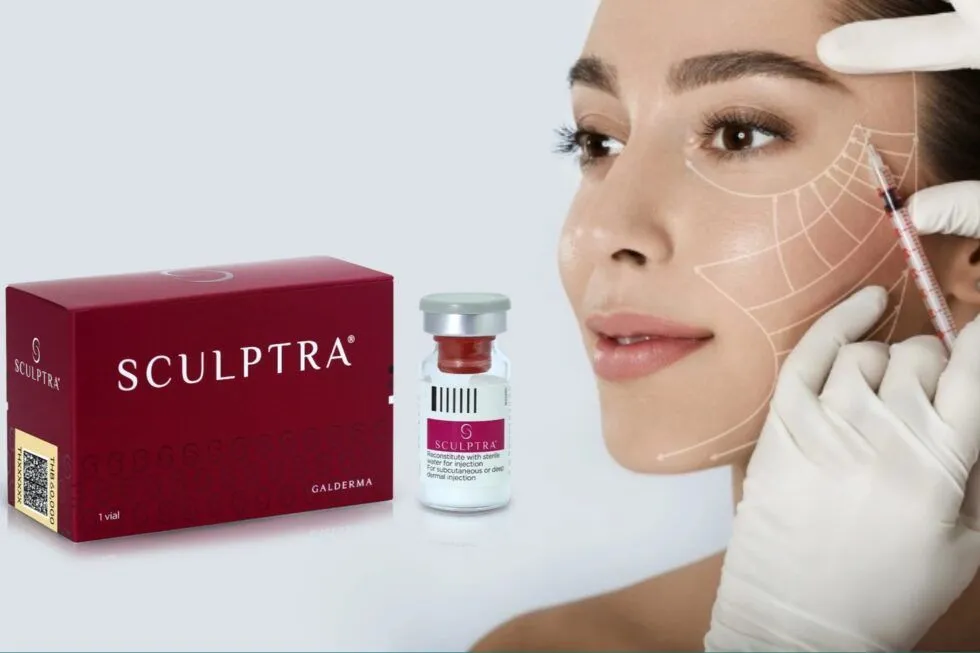
Sculptra is a collagen-stimulating injectable approved by the Medicines and Healthcare products Regulatory Agency (MHRA) in the UK and manufactured by Galderma. It works differently from standard dermal fillers: rather than adding volume immediately, it encourages your skin to produce its own collagen over several months, with results that typically last two years or more. Treatment involves two to three sessions spaced four to six weeks apart.
Costs range from £300 to £800 per vial depending on clinic and location, with a full facial course typically costing between £1,200 and £2,500. The Aesthetic Standard features verified Sculptra clinics across London, Manchester and Birmingham, each manually reviewed for practitioner credentials, safety standards and patient care.
Sculptra Treatment Summary
Treatment type: Collagen-stimulating injectable (PLLA biostimulator)
Common concerns treated: Hollow cheeks, lost temple volume, nasolabial folds, jawline laxity, crepey skin, neck lines, non-surgical buttock enhancement
Procedure length: 30 to 45 minutes per session
Anaesthetic: A numbing agent is mixed into the Sculptra solution; topical numbing cream is applied to the skin before treatment
Recovery time: Minimal; mild swelling and redness at injection sites typically resolves within 24 to 72 hours
Results visible: Initial improvements from 6 to 12 weeks; full result develops over 3 to 6 months after completing the course
Sessions recommended: Typically 2 to 3 sessions spaced 4 to 6 weeks apart
What Is Sculptra?
Sculptra is not a filler in the traditional sense. When most people think of injectable treatments, they picture something that adds volume immediately, like a gel placed under the skin to fill out a hollow area. Sculptra works differently. It does not add anything permanent to your face. Instead, it signals your skin to start producing more of its own collagen.
Sculptra is classified as a biostimulator. This is a term worth understanding because it explains why Sculptra behaves so differently from a standard filler. A biostimulator does not add anything to your face that stays there. Instead it stimulates your body’s own biological processes, in this case collagen production, to create the result. The improvement you see is your own tissue responding to the treatment, not a substance sitting under your skin. This is why results look natural, why they take time to develop, and why they last significantly longer than standard fillers.
The active ingredient is poly-L-lactic acid, commonly referred to as PLLA. This is a synthetic material that has been used safely in medicine for over 30 years, including in dissolvable stitches. It is completely biocompatible, meaning your body accepts it and breaks it down naturally over time. Sculptra is manufactured as a powder by Galderma, one of the world’s leading aesthetic medicine companies. Before each treatment session, the powder is mixed fresh with sterile water and a numbing agent.
When Sculptra is injected into the skin, the body recognises the PLLA particles and begins producing new collagen around them. As the particles gradually break down over the months that follow, they leave behind that newly produced collagen. The result is that your skin becomes structurally stronger and better supported from within, using tissue your body has made itself.
Sculptra is approved by the Medicines and Healthcare products Regulatory Agency (MHRA) in the UK and by the US Food and Drug Administration (FDA). In December 2025, manufacturer Galderma received EU certification formally expanding Sculptra’s approved uses to include body areas including the buttocks, posterior thighs, décolletage and upper arms, reflecting decades of clinical use beyond the face.
The result you see on the day is not the real result
One thing that catches many patients off guard: immediately after a Sculptra session, the treated area looks temporarily fuller. This is not the collagen. It is the water used to mix the product, and it absorbs into your body within 48 to 72 hours. The area then returns to close to how it looked before treatment. This is completely normal. The real result, the collagen your body has started producing, becomes visible from around six to twelve weeks after each session. Knowing this in advance makes the experience much less confusing.
Who Is a Good Candidate for Sculptra
Sculptra suits patients who want to address lost volume and declining skin quality with a result that looks natural and builds gradually, rather than an immediate transformation. It works particularly well for patients whose face looks overall more depleted or hollowed out, rather than those who want to target one specific wrinkle or fold.
Good candidates for Sculptra treatment typically:
- Have lost volume in the cheeks, temples or along the jawline through ageing or weight loss
- Want results that develop progressively and look natural rather than treated
- Are prepared to commit to a course of two to three sessions
- Understand that visible improvement takes weeks to months, not days
- Are in good general health
- Are not pregnant or breastfeeding
- Have realistic expectations about what a non-surgical treatment can achieve
Who is not suitable for Sculptra:
- Anyone with a known allergy to any ingredient in the product
- Those with a history of keloid or raised scarring, as this can indicate the skin produces too much collagen in response to injury
- Patients who are pregnant or breastfeeding
- Those with an active skin infection or inflammation in the area to be treated
- Patients whose immune system is significantly compromised, as the treatment relies on a healthy immune response to stimulate collagen
- Anyone expecting results that have an immediate and dramatic change
- Patients wanting treatment in the lips, forehead or directly under the eyes: these areas are not appropriate for Sculptra regardless of individual suitability elsewhere
A consultation with a qualified practitioner is always required before treatment to confirm suitability and review medical history.
Good Candidate
- Volume loss in cheeks, temples or jawline
- Wants gradual, natural-looking results
- Prepared for a course of sessions
- Good general health
- Realistic expectations
- Not pregnant or breastfeeding
- No active skin infection at treatment site
Not Suitable
- Known allergy to any Sculptra ingredient
- History of keloid or raised scarring
- Pregnant or breastfeeding
- Significantly compromised immune system
- Active infection at treatment site
- Wants immediate dramatic results
- Seeking treatment in the lips, forehead or under-eye area
Sculptra vs Dermal Fillers
Sculptra and hyaluronic acid dermal fillers are both injectables that address volume-related concerns, but they work in completely different ways. Understanding the difference is important before deciding which approach suits you.
A standard dermal filler adds volume by physically placing a gel under the skin. You see the result immediately, and it typically lasts between 6 and 18 months before your body gradually absorbs it. If you do not like the result, it can be dissolved.
Sculptra adds no immediate volume. It works by encouraging your own body to produce collagen over several months. The result develops gradually and lasts significantly longer, typically two years or more. It cannot be dissolved once injected.
Neither is better than the other. They suit different patients and different goals.
| Feature | Sculptra | Dermal Filler |
|---|---|---|
| How it works | Stimulates your own collagen production over several months | Adds gel volume directly beneath the skin surface |
| Results visible | Gradually, over 3–6 months | Immediately |
| How long it lasts | Up to 2 years or more | 6–18 months depending on product and area |
| Can it be reversed? | No | Yes, with an enzyme called hyaluronidase |
| Best suited for | Broad volume loss across cheeks, temples, jawline | Precise localised concerns: lips, tear trough, specific lines |
| Appearance of result | Progressive, natural improvement | Immediate volumising effect |
If you have lost volume across a broad area of your face over time, Sculptra typically produces a more natural and longer-lasting result than repeated filler sessions. If you want to target a specific, localised concern such as lip volume or a precise fold, hyaluronic acid filler is usually the more appropriate tool. Many patients use both at different points in a treatment plan, and a qualified practitioner will advise on the right approach for your specific anatomy and goals.
What Can Sculptra Treat?
Sculptra is most effective where the concern is volume loss or declining skin quality across a broader treatment zone, such as the full cheek area, temples or jawline, rather than a single targeted line or fold. Because it builds collagen gradually throughout the treated zone rather than filling a specific point, it suits patients whose face has changed broadly over time rather than those who want to address one precise area.
Hollow temples: The temples are often the first area of the face to visibly hollow with age. When they lose volume, the face can start to look gaunt or sunken at the sides. Sculptra restores the fullness that keeps the upper face looking balanced and lifted.
Sunken cheeks and midface: As the cheeks lose their natural fullness, the whole face can start to look flatter and more tired. Sculptra gradually rebuilds the support in the midface, improving the definition around the cheekbones and helping to lift the lower face above it.
Nasolabial folds: The lines that run from the nose to the corners of the mouth often deepen not because of the skin itself but because the structure above has lost support. Sculptra addresses the cause by rebuilding that structure, which in turn softens the fold.
Marionette lines and early jowling: Volume loss along the sides of the face and jawline contributes to the downward drift that creates jowls and deepens the lines below the mouth corners. Sculptra improves definition along the lower face by rebuilding the structure beneath.
Crepey skin and skin quality: As well as restoring volume, the new collagen produced in response to Sculptra improves the overall thickness and quality of the skin in the treated area. This makes it useful for patients whose primary concern is that the skin itself has become thinner and more fragile over time.
Volume loss following significant weight loss: Patients who have lost a significant amount of weight, including those who have used GLP-1 weight loss medications, often experience a hollowed, deflated appearance across the face. Sculptra suits this type of broad, whole-face volume loss well because its gradual and natural result avoids the overfilled look that multiple rounds of traditional filler in the same area can create.
Neck and buttocks: Sculptra is also used for neck rejuvenation and non-surgical buttock enhancement. These are covered in detail in dedicated sections below.
Sculptra: Combination Treatments
Sculptra is increasingly used alongside other aesthetic treatments to improve results or address concerns that a single treatment cannot fully resolve on its own.
Sculptra + CO2 Laser
CO2 laser improves surface skin quality, texture and tone by removing damaged skin and stimulating collagen from above. Sculptra addresses structural volume loss from beneath. For patients who have both concerns, which is common with significant sun damage or ageing, a planned combination of both treatments can achieve results that neither delivers alone. Read our full guide to fractional CO2 laser resurfacing or visit the CO2 laser treatment guide for a full overview of all CO2 laser options.
Sculptra + Polynucleotides
Polynucleotides improve skin quality at a cellular level, targeting hydration, fine lines and skin texture. Sculptra rebuilds structural volume beneath. The two work through different mechanisms and complement each other well for patients who need both skin quality improvement and deeper structural restoration. Read our full guide to polynucleotide treatment.
Sculptra + Profhilo
Profhilo is a skin remodelling injectable that improves overall skin laxity and hydration. Combined with Sculptra, the two can address both the structural volume deficit and the overall skin quality decline that often occur together in patients experiencing significant facial ageing.
Sculptra + Dermal Fillers
Sculptra and hyaluronic acid fillers serve different purposes and can work well together in a planned treatment programme. Sculptra rebuilds broad structural volume gradually over months while fillers can address specific, localised concerns such as the lips or tear trough immediately. Your practitioner can advise on whether a combined approach suits your goals.
During your consultation, ask your practitioner whether a combination approach is appropriate for your specific concerns. Not all clinics offer every combination treatment, and the order and timing of treatments matters clinically.
Sculptra for the Face and Cheeks
The face and cheeks are Sculptra’s primary treatment areas and where it has the longest clinical track record. It suits patients who have noticed their face starting to look more hollow, flat or tired over time, particularly in the upper and mid parts of the face.
A useful starting point for understanding how much product is needed is what practitioners call the vial per decade guideline. A patient in their 40s might need approximately four vials spread across their full treatment course; someone in their 50s might need five or six. This is a general guide rather than a fixed rule, and the right amount for you depends on your individual anatomy, the degree of volume loss and what you are trying to achieve. Your practitioner will confirm the recommendation at consultation.
Primary treatment areas on the face:
- Temples: Restores fullness to the sides of the forehead, giving the upper face a more balanced and lifted appearance
- Cheeks and midface: Improves volume and definition in the central face, supporting the structures below it
- Jawline and pre-jowl area: Rebuilds definition along the lower face and reduces the early signs of jowling
- Nasolabial folds and marionette lines: Softened indirectly by restoring the structural support above them
Sculptra is not suitable for use in the lips, on the forehead or directly under the eyes. These areas carry a higher risk of lumps forming and are avoided by all responsible practitioners regardless of patient suitability elsewhere.
For under-eye skin quality concerns, polynucleotide treatment is often a more appropriate option. For tear trough hollowing, hyaluronic acid filler placed specifically in that area is the standard approach.
When thinking about combining Sculptra with other treatments, fractional CO2 laser resurfacing is one of the most clinically complementary pairings. CO2 laser addresses surface skin quality, texture and tone, while Sculptra addresses the deeper structural volume loss beneath. Patients who have both concerns, and many do, often achieve better results from a planned combination of both than from either treatment alone.
Sculptra for the Neck
Using Sculptra on the neck is off-label in the UK, meaning it falls outside the formal approval issued by the MHRA, which covers facial use. This does not mean it is unsafe or experimental. Sculptra has been used by trained practitioners for neck rejuvenation for many years with a strong clinical record, and in December 2025, Galderma received EU certification formally expanding Sculptra’s approved uses to include body areas. The UK position should be confirmed with your practitioner at consultation. At the time of writing, the MHRA has not formally updated its UK approval to reflect the December 2025 EU certification. Practitioners offering Sculptra for the neck and body in the UK do so on an off-label basis, which is common and accepted practice for many established aesthetic uses.
The neck needs to be treated differently to the face. The skin here is thinner, has fewer natural oils, and is constantly moving throughout the day. To account for this, practitioners mix the product with more water than they would for a facial treatment, which allows it to spread more evenly across the broader surface area. The injection technique is also different, using a fanning pattern to distribute the product across the full treatment zone.
What Sculptra addresses on the neck:
- Crepey, thinning skin that has lost density and firmness
- Horizontal lines caused by years of looking down at screens, often called tech neck
- Mild to moderate skin laxity and early sagging
- Overall improvement in neck skin texture and quality
What it does not address: Significant vertical banding on the neck, pronounced skin excess or structural changes that require surgery.
Most patients need one to four sessions spaced four to six weeks apart. The number of vials per session is typically one to three depending on the degree of concern. Results become visible from six to eight weeks and can last up to two to three years.
The aftercare massage rule is particularly important after neck treatment because the neck moves so much throughout the day. Patients must massage the treated area for five minutes, five times a day, for five consecutive days after each session without exception.
Pricing for neck treatment in the UK: approximately £450 to £750 per vial. A full neck course typically costs between £900 and £2,200 depending on the number of sessions and vials required.
Sculptra for the Buttocks
Sculptra for the buttocks is a non-surgical alternative to procedures like the Brazilian Butt Lift (BBL) that uses collagen stimulation to gradually add modest volume, improve skin firmness and smooth the surface of the area including hip dips and the appearance of cellulite.
This use is currently off-label for MHRA purposes in the UK. However, in December 2025 Galderma received EU certification formally approving Sculptra for body areas including the gluteal region, posterior thighs, décolletage and upper arms. This reflects over two decades of clinical use in body applications by trained practitioners and represents a significant step in the formal recognition of what has already been established in practice.
How buttock treatment differs from facial treatment:
The buttocks are a significantly larger area than any part of the face, so substantially more product is needed. A typical session uses approximately four vials per side, totalling eight vials, compared to one or two for a facial session. This difference is reflected directly in the cost and is something to factor in carefully when planning treatment.
The product is delivered using a blunt instrument called a cannula rather than a needle, threaded beneath the skin to distribute the product evenly across the treatment area. Local anaesthetic is administered beforehand.
What patients typically experience:
Immediately after treatment there is temporary fullness from the water used to mix the product. This settles within three to four days. The area then returns to close to its pre-treatment appearance before collagen stimulation gradually develops over the following weeks and months. Most patients need two to four sessions spaced four to six weeks apart, with full results visible three to six months after completing the course. Results typically last two to three years.
What Sculptra can and cannot achieve:
Sculptra suits patients who want a subtle, natural improvement in shape, firmness and skin quality rather than a dramatic size increase. It works well for smoothing hip dips, improving skin texture and adding modest lift to a flat or sagging area. It does not replicate the volume possible through surgical fat transfer, and it is not a treatment for significant skin excess.
The aftercare massage rule is essential after buttock treatment. Missing it is the main preventable cause of lumps forming after treatment. Sculptra buttock treatment must only be performed by a practitioner who has specific training in body applications, and a thorough consultation is required before proceeding.
Sculptra Before and After
Sculptra does not produce a visible result on the day of treatment. The initial fullness seen directly after each session comes from the water used to mix the product and disappears within 48 to 72 hours. Patients who understand this before they start are much better placed to experience the treatment positively.
Improvements typically become visible from six to twelve weeks after each session as new collagen develops. The full result of a completed course builds over three to six months. Clinical data from Galderma, the manufacturer, shows that 95% of patients had improved skin quality two years after Sculptra treatment, and 86% had improved jawline contour two years after treatment when the cheek region was treated.
Common improvements seen in Sculptra before and after results:
- Restored fullness in the cheeks and midface
- Reduced nasolabial folds and marionette lines from improved structural support above them
- Better definition along the jawline and reduced early jowling
- Firmer, thicker, better quality skin in treated areas
- A more rested, less depleted overall appearance
- Improved skin firmness and texture in the neck or body where treated
Results vary depending on the degree of volume loss, the number of sessions completed, age and individual response. Patients who complete the full recommended course consistently report better outcomes than those who have a single session.
For a full breakdown of what to expect at each stage, realistic timelines and before and after results by treatment area, read our dedicated Sculptra before and after guide.
Sculptra Treatment Cost
Sculptra is priced per vial in the UK. The number of vials needed depends on the treatment area, the degree of volume loss and the patient’s age and anatomy. Your practitioner will confirm the recommended number of vials and sessions at consultation.
UK pricing by location:
London clinics typically charge £450 to £800 per vial. Clinics in Harley Street, Mayfair and Knightsbridge tend to sit at the higher end of this range at £600 to £800. Mid-range London clinics typically charge £450 to £550. A standard facial course in London typically costs £1,500 to £2,500.
Manchester and Birmingham clinics typically charge £300 to £550 per vial. Most regional clinics sit between £350 and £500 per vial. A standard facial course typically costs £900 to £1,800 in these cities.
Indicative costs by treatment area:
- Face (full course): £1,200 to £2,500 depending on location and vials required
- Neck: £450 to £750 per vial; a full neck course typically £900 to £2,200
- Buttocks: Significantly higher due to the volume of product required. Confirm at consultation as pricing varies considerably by clinic.
Factors that influence Sculptra cost:
- Treatment area (body treatments require significantly more product than facial treatment)
- Number of vials needed based on degree of volume loss
- Number of sessions in the full recommended course
- Clinic location and practitioner experience
- Whether combination treatments are part of the plan
Sculptra costs more upfront than a single session of standard filler. However, because results typically last two years or more, the cost per year of result is often competitive with treatments that need refreshing every six to twelve months. This is worth factoring in when comparing options.
The Aesthetic Standard lists verified Sculptra clinics across London, Manchester and Birmingham, each manually reviewed for practitioner credentials, safety standards and patient care.
What to Expect on the Day of Sculptra Treatment
Sculptra treatment is carried out as a day appointment. You come in, have the treatment and go home the same day with minimal restrictions on your normal activity.
Before the treatment begins: A numbing cream is applied to the skin and left for around 20 to 30 minutes. While you wait, your practitioner will go through your medical history and consent form, take photographs of the treatment area and talk through the plan for the session. Sculptra is prepared fresh for every patient immediately before the appointment. The powder is mixed with water and a numbing agent specifically for you. Once mixed, it cannot be used at a later date or for another patient.
During the treatment: Sculptra is injected into the treatment area using a fine needle or a blunt-tipped instrument called a cannula, depending on the area being treated and your practitioner’s approach. Multiple injection points are used to spread the product evenly. The session typically takes 30 to 45 minutes. Most patients find it comfortable, as both the numbing cream and the numbing agent in the product itself help manage any discomfort.
Immediately after treatment: The treated area will look temporarily fuller than usual. This is the water from the product mix, not the collagen result, and it absorbs into the body within 48 to 72 hours. Some redness, mild swelling and occasional bruising at the injection sites is normal and settles within a few days. Before you leave, your practitioner will explain the massage aftercare routine that you must follow starting from that same day.
Most patients return to work and normal activities the following day.
Sculptra Recovery and Downtime
One of the advantages of Sculptra over many other injectable treatments is how little it disrupts your daily life. There are no cuts, no removal of skin and no lengthy healing process. Most patients return to normal activity within 24 to 48 hours, though understanding what to expect at each stage helps avoid unnecessary worry, particularly around the temporary fullness that appears and then disappears in the first few days.
Typical Sculptra Treatment Recovery Timeline
Sculptra Aftercare
Aftercare after Sculptra treatment is straightforward, with one instruction that is not optional.
- The 5-5-5 massage rule: Massage all treated areas for five minutes, five times a day, for five consecutive days following every session. This spreads the product evenly through the tissue and prevents the particles from grouping together and forming lumps under the skin. This applies to all treatment areas without exception, including the face, neck and body. Missing this step is the main preventable cause of complications after Sculptra.
- Avoid pressing, touching or rubbing the treated area beyond the prescribed massage for at least 24 hours
- Avoid strenuous exercise, saunas and steam rooms for at least 24 hours as heat increases swelling and can affect how evenly the product settles
- Avoid alcohol for 24 hours before and after treatment as it increases the risk of bruising
- Do not take ibuprofen, aspirin or blood-thinning supplements for at least 24 hours after treatment unless prescribed by your doctor
- A cold compress applied gently in the first 24 hours can help if swelling is uncomfortable
- Keep the treated area out of direct sun and apply a high-SPF sunscreen once any redness has resolved
- Attend all planned sessions in the course: the full collagen-building result requires completing the full treatment programme
- Follow any specific aftercare instructions provided by your practitioner, as these may vary depending on the treatment area and the number of vials used
Sculptra Risks and Side Effects
Sculptra has been in clinical use for over two decades and has a well-established safety profile. When it is administered by a trained practitioner following the correct preparation and technique, it is considered safe and well tolerated by most patients.
Common side effects that affect most patients and resolve within a few days:
- Mild swelling and redness at the injection sites
- Bruising, which occurs in around 15% of patients and typically resolves within 72 hours
- Mild tenderness or sensitivity in the treated area for one to three days
Less common risks:
- Lumps under the skin: This is the most important risk specific to Sculptra. Small firm lumps can develop if the product is not distributed evenly through the tissue. The main causes are injection technique that is too shallow, product that has not been prepared correctly, and patients who do not follow the five-day massage aftercare. Choosing a practitioner with specific Sculptra experience and following the aftercare instructions carefully significantly reduces this risk.
- Infection: Rare when treatment is performed in a proper clinical setting with correct preparation and technique.
Rare but serious:
- Vascular occlusion: if the needle or cannula inadvertently compresses or enters a blood vessel, it can restrict blood supply to the surrounding tissue. Signs include intense pain and skin that turns white or mottled at the treatment site. This is a medical emergency requiring immediate treatment by the practitioner. The risk is lower with a cannula than with a needle but is not zero.
What you need to know before committing:
Sculptra cannot be dissolved or removed after treatment. There is no equivalent of the enzyme used to dissolve hyaluronic acid fillers. Once injected, it is permanent until it breaks down naturally over time. This makes choosing a qualified practitioner with specific, documented Sculptra experience particularly important.
Sculptra must not be used in the lips, forehead or directly under the eyes. These zones carry a higher risk of complications and are avoided regardless of patient suitability elsewhere.
If you notice unusual firmness, persistent swelling, skin discolouration or any signs of infection after treatment, contact your practitioner promptly.
How to Choose a Sculptra Clinic
Sculptra requires specific training that goes beyond general injectable experience. The preparation of the product, the correct dilution, the injection depth and the aftercare instruction all differ meaningfully from standard filler technique. Choosing a practitioner with specific, documented Sculptra experience matters both for your safety and the quality of your result.
When choosing a Sculptra clinic, look for:
- Specific training and experience in Sculptra administration, not just general injectable experience
- A thorough medical consultation before treatment is agreed, not a quick assessment on the day
- Clear, honest information about realistic results and the full course of sessions required
- Transparent pricing covering the number of vials and sessions recommended for your concerns
- A detailed aftercare protocol with clear instruction on the five-day massage rule before you leave
- Before and after photographs of real patients treated at that clinic for similar concerns to yours
- Confirmation that the clinic holds professional indemnity insurance that specifically covers Sculptra treatment
- A clear process for managing adverse reactions, with a direct contact for post-treatment support
Regulatory bodies and professional standards:
For doctor-led clinics, the British College of Aesthetic Medicine (BCAM) is the primary professional membership body for aesthetic medicine practitioners in the UK. Doctors should hold current registration with the General Medical Council (GMC), which you can verify directly online.
For dentist-led clinics, look for British College of Aesthetic Medicine (BCAM) membership alongside current registration with the General Dental Council (GDC), also verifiable online.
For nurse-led clinics, the British Association of Medical Aesthetic Nurses (BAMAN) is the relevant professional body. Nurses should hold current registration with the Nursing and Midwifery Council (NMC), verifiable directly online.
The Care Quality Commission (CQC) is the independent government regulator of health and social care in England. CQC registration is not currently mandatory for cosmetic clinics, but where a clinic holds it voluntarily this demonstrates an exceptionally high standard of clinical governance and commitment to patient safety.
Save Face is the UK’s only government-approved register of accredited practitioners and clinics providing non-surgical cosmetic treatments. Accreditation is assessed independently against rigorous safety and quality standards.
The Joint Council for Cosmetic Practitioners (JCCP) is an independent voluntary register setting professional standards across the non-surgical cosmetic sector.
Professional indemnity insurance: Confirm the clinic holds professional indemnity insurance that specifically covers Sculptra treatment. Because Sculptra requires a local anaesthetic Prescription-Only Medicine as part of its preparation, insurers apply specific criteria to Sculptra coverage. A general aesthetics policy that does not explicitly cover Sculptra is not sufficient.
How The Aesthetic Standard verifies Sculptra clinics:
Sculptra listings on The Aesthetic Standard are currently restricted to clinics with a named GMC, GDC or NMC registered prescriber. Sculptra is mixed with a local anaesthetic before it is administered. Local anaesthetics are Prescription-Only Medicines in the UK, which means a doctor, dentist or nurse prescriber must see the patient in person and issue a prescription before treatment can go ahead. The treatment can then be carried out by the prescriber themselves or by another suitably trained practitioner under the prescriber’s supervision. Legal responsibility remains with the prescriber throughout.
We verify statutory registration of the named prescriber, BCAM or BAMAN professional membership, professional indemnity insurance covering Sculptra specifically, and voluntary CQC registration where held. We review independent patient feedback across Google and Trustpilot. We speak directly with the lead practitioner at every clinic, and where possible we also speak with patients who have undergone treatment there.
The UK Government is currently developing a licensing scheme for non-surgical cosmetic procedures in England. Because Sculptra requires a Prescription-Only Medicine as part of its preparation, it is likely to be placed in a higher risk category under the proposed scheme, which would formally require a named prescribing healthcare professional to be involved in every treatment. This scheme is not yet law and no start date has been confirmed. The Aesthetic Standard will update its criteria when any new requirements come into force.
Questions to Ask at Your Sculptra Consultation
A consultation is your opportunity to assess whether the practitioner and the treatment plan are right for you. These questions will help you make an informed decision:
- What is your specific training and experience with Sculptra, and how many Sculptra treatments do you carry out per month?
- How many vials are you recommending for my concerns and why?
- Can I see before and after photographs of patients you have treated for similar concerns to mine?
- What results can I realistically expect and over what timeframe?
- What is the total cost of the full recommended course, and are follow-up appointments included?
- How does the five-day massage aftercare apply to the specific areas I am having treated?
- What aftercare should I follow beyond the massage routine, and are there any restrictions on my normal activities or skincare in the days after treatment?
- What are the key risks I should be aware of given my anatomy and medical history?
- What is your process if I develop a lump or another reaction after treatment?
- Are there other treatments worth considering alongside Sculptra for my concerns?
- Will I need a follow-up appointment after each session and is this included in the price?
Sculptra Clinics by Location
The Aesthetic Standard has reviewed and verified Sculptra clinics across the UK’s main cities. Each clinic is manually assessed for practitioner qualifications, safety standards and patient care before being listed. Each city guide covers local pricing, how we select clinics in that area and verified practitioners offering Sculptra:
Sculptra Clinics in Manchester
Sculptra Clinics in Birmingham
Browse the full treatments guide or explore the clinic directory to find verified practitioners and clinics across London, Manchester and Birmingham.
Sculptra FAQs
What is Sculptra?
Sculptra is a collagen-stimulating injectable made from poly-L-lactic acid (PLLA), manufactured by Galderma and approved by the MHRA in the UK. Unlike standard dermal fillers that add volume immediately, Sculptra works by encouraging your body to produce its own collagen over several months, producing results that typically last two years or more.
What is the difference between Sculptra and a dermal filler?
Standard dermal fillers add volume immediately by placing gel under the skin. Sculptra triggers collagen production gradually over months rather than adding anything directly. Results take longer to appear but last significantly longer. Sculptra also cannot be dissolved after treatment, while hyaluronic acid fillers can be reversed with an enzyme called hyaluronidase.
How many Sculptra sessions will I need?
Most patients need two to three sessions spaced four to six weeks apart. The exact number depends on the treatment area, the degree of volume loss and your anatomy. Body treatments such as the neck or buttocks may need more sessions than facial treatment. Your practitioner will confirm the full recommended course at your consultation.
When will I see results from Sculptra?
Initial improvements typically become visible from six to twelve weeks after each session as new collagen develops. The full result of a completed course builds over three to six months. Galderma’s clinical data shows that 95% of patients had improved skin quality two years after treatment.
How long does Sculptra last?
Results typically last up to two years. Some patients retain improvements beyond two years depending on individual response and lifestyle. Annual or biannual top-up sessions can maintain results over the longer term.
How much does Sculptra cost in the UK?
Sculptra is priced per vial. In London, expect £450 to £800 per vial, with a full facial course typically costing £1,500 to £2,500. In Manchester and Birmingham, prices typically range from £300 to £550 per vial, with a full course costing £900 to £1,800. See our London, Manchester and Birmingham pages for city-specific pricing context.
Can Sculptra be reversed?
No. There is no equivalent of the enzyme used to dissolve hyaluronic acid fillers. Sculptra breaks down naturally over time but cannot be removed once injected. This makes choosing a qualified, experienced practitioner with specific Sculptra training essential before you commit to treatment.
What is the 5-5-5 massage rule?
After each Sculptra session, you must massage all treated areas for five minutes, five times a day, for five consecutive days. This spreads the product evenly through the tissue and prevents lumps from forming. Missing the massage aftercare is the main preventable cause of complications after Sculptra treatment.
Why does my face look fuller immediately after Sculptra and then go back to normal?
The immediate fullness is caused by the water used to mix the product, not by the collagen result. Your body absorbs this water within 48 to 72 hours and the area returns to close to its pre-treatment appearance. The real result, the collagen your body has been stimulated to produce, starts becoming visible from around six to twelve weeks after each session.
Can Sculptra be used on the neck?
Yes. Sculptra is used off-label in the UK for neck rejuvenation, addressing crepey skin, horizontal neck lines and mild laxity. It requires a different technique to facial treatment and strict adherence to the five-day massage aftercare. Results typically last two to three years once the collagen has fully developed.
Is Sculptra suitable for buttock enhancement?
Sculptra is used off-label in the UK for non-surgical buttock enhancement. In December 2025, Galderma received EU certification formally approving Sculptra for the gluteal area. Treatment requires significantly more product than facial treatment, typically four vials per side per session, and must be performed by a practitioner specifically trained in body application.
Can Sculptra be combined with other treatments?
Yes. Fractional CO2 laser resurfacing is one of the most complementary combinations: CO2 laser improves surface skin quality, texture and tone while Sculptra addresses the deeper structural volume loss beneath. Polynucleotide treatment also pairs well with Sculptra where a patient needs both skin quality improvement and structural rebuilding. Timing and sequencing for combination treatments should always be confirmed with a qualified practitioner.
Who is not suitable for Sculptra?
Sculptra is not appropriate for patients with a history of keloid or raised scarring, those who are pregnant or breastfeeding, patients with a significantly compromised immune system, anyone with an active skin infection at the treatment site, or those wanting immediate dramatic results. The lips, forehead and area directly under the eyes are not appropriate injection zones for any patient.