CO2 Laser Skin Resurfacing
Procedure Length
Recovery Time
Results Visible
Cost Range
In This Guide
Last updated: 11 October 2026
Key Benefits of CO2 Laser Resurfacing
Clinically proven resurfacing: CO2 laser is one of the most researched and effective non-surgical treatments for skin texture, acne scars and wrinkles available in the UK.
Treats multiple concerns in one treatment: A single course can address acne scars, deep wrinkles, sun damage, skin laxity and uneven texture simultaneously.
Long-term collagen stimulation: Results continue to develop for 3 to 6 months as new collagen matures beneath the skin, with improvements lasting several years.
Two treatment depths available: Fractional CO2 laser for moderate concerns with shorter downtime, or fully ablative CO2 laser for more significant resurfacing – treatment depth matched to your specific concern.
Medically led treatment: CO2 laser resurfacing is an advanced medical procedure performed by qualified practitioners, not a beauty treatment.
CO2 Laser Skin Resurfacing: Overview
CO2 laser skin resurfacing is one of the most effective treatments for improving skin texture, reducing wrinkles, tightening skin laxity and treating acne scars. This guide covers how CO2 laser works, what it treats, recovery time, costs and how to find a verified clinic. The Aesthetic Standard features verified CO2 laser clinics across the UK, each manually reviewed for practitioner credentials, safety standards and patient care. Treatments typically range from £500 to £3,500 per session across London, Manchester and Birmingham.
CO2 Laser Treatment Summary
Treatment type: Laser skin resurfacing
Common concerns treated: Acne scars, wrinkles, sun damage, skin laxity, uneven skin texture
Procedure length: Typically 30–90 minutes, depending on the treatment area and depth
Anaesthetic: Usually topical numbing cream, sometimes local anaesthetic or sedation for deeper treatments
Recovery time: 5–14 days for initial healing, depending on treatment depth and whether fractional or fully ablative CO2 laser resurfacing is performed
Results visible: Initial improvement may be visible within 1–2 weeks, with continued collagen production and skin improvement over 3–6 months
What Is CO2 Laser Resurfacing?
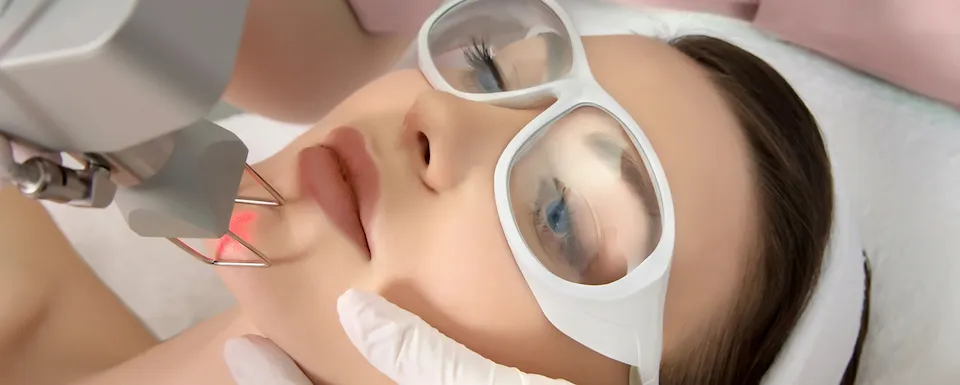
CO2 laser treatment is a medical skin resurfacing procedure that uses a carbon dioxide (CO2) laser to remove damaged outer layers of skin while stimulating collagen production in the deeper layers. The laser creates controlled micro-injuries in the skin, allowing new, healthier skin to regenerate during the healing process. Because the CO2 laser penetrates deeper than many other laser treatments, it is commonly used to improve deep wrinkles, acne scars, sun damage, and uneven skin texture.
CO2 laser resurfacing is typically performed as a day procedure in a clinic setting, meaning patients can return home shortly after treatment. The procedure itself typically takes between 30 minutes to 2 hours, depending on the size of the treatment area and whether fractional or fully ablative CO2 laser resurfacing is performed.
Who Is a Good Candidate for CO2 Laser Resurfacing?
CO2 laser resurfacing is suitable for patients who want to improve skin texture, reduce wrinkles, tighten mild to moderate skin laxity, treat acne scars, or address sun damage. The treatment is recommended for individuals with fair to medium skin tones, although individuals with darker skin types may still be treated following careful assessment by an experienced practitioner.
A consultation with an experienced practitioner is important to determine whether CO2 laser treatment is appropriate. During the consultation, the practitioner will assess skin type, discuss medical history, and evaluate the severity of skin concerns such as acne scarring, wrinkles, or pigmentation.
Patients with active skin infections, certain medical conditions, or a history of abnormal scarring may not be suitable candidates for CO2 laser resurfacing. A qualified practitioner can advise on the safest treatment options.
Fractional vs Fully Ablative CO2 Laser
CO2 laser treatments are usually performed using either fractional CO2 laser technology or fully ablative CO2 laser resurfacing. Both methods use a carbon dioxide (CO2) laser to remove damaged skin and stimulate collagen production, but they differ in how much skin is treated at one time and how long the recovery takes. Fractional CO2 lasers treat the skin in microscopic columns, leaving surrounding skin intact to speed up healing. Fully ablative CO2 laser resurfacing removes the entire surface layer of the skin in the treated area, which can produce more dramatic results but usually requires a longer recovery period.
Fractional CO2 Laser
- Treats the skin in tiny microscopic columns
- Faster recovery time compared to fully ablative treatment
- Lower risk of side effects and post-treatment complications
- Often used for acne scars, pores, and mild wrinkles
Fully Ablative CO2 Laser
- Removes the entire outer layer of skin in the treated area
- Produces stronger resurfacing results
- Longer downtime and healing period
- Often used for deep wrinkles, severe sun damage, and surgical scars.
| Feature | Fractional CO2 Laser | Fully Ablative CO2 Laser |
|---|---|---|
| How it works | Treats skin in microscopic columns, leaving surrounding tissue intact | Removes entire outer layer of skin in the treated area |
| Recovery time | 3–7 days | 10–14 days |
| Results visible | 1–2 weeks | 4–6 weeks |
| Cost range | £500–£2,500 | £1,000–£3,500 |
| Sessions needed | 1–3 sessions | Usually 1 session |
| Anaesthetic | Topical numbing cream | Local anaesthetic or sedation |
| Best for | Fine lines, mild acne scars, enlarged pores, mild skin tightening | Deep wrinkles, severe acne scarring, significant sun damage, skin tightening |
| Suitable skin types | Fitzpatrick Types I–IV | Fitzpatrick Types I–III |
For a detailed guide to each type, read our Fractional CO2 Laser guide and Ablative CO2 Laser guide.
What Can CO2 Laser Treat?
CO2 laser skin resurfacing can treat a wide range of skin concerns by removing damaged skin cells and stimulating new collagen production. Because the laser penetrates deeper layers of the skin, it is commonly used to improve acne scars, reduce wrinkles, tighten loose or crepey skin and improve mild to moderate skin laxity, and smooth uneven skin texture. Many patients also choose CO2 laser treatment to improve enlarged pores, sun damage, pigmentation issues, and surgical scars.
Common skin concerns treated with CO2 laser include:
- Acne scars and surgical scars
- Fine lines and deep wrinkles
- Sun damage, age spots and uneven skin tone (including brown spots and sun spots)
- Enlarged pores and rough skin texture
- Loose or crepey skin
- Mild to moderate skin laxity – CO2 laser tightens skin through two mechanisms: immediate tightening as heat causes existing collagen to contract, and longer-term firmness as new collagen production develops over 3–6 months. Fully ablative CO2 laser produces more significant tightening than fractional treatment
- Pigmentation and age spots
CO2 Laser Combination Treatments
CO2 laser resurfacing is increasingly combined with other treatments to enhance results or address concerns that laser alone cannot fully resolve. Combination approaches are particularly common in London, Manchester and Birmingham, where practitioners have access to a wide range of advanced technologies and techniques.
CO2 laser and PRP (Platelet Rich Plasma): PRP uses the patient’s own blood plasma, which is rich in growth factors, to accelerate healing and enhance collagen production after CO2 laser resurfacing. When applied immediately after laser treatment, PRP can support faster recovery and improve overall results, particularly for patients treating acne scarring.
CO2 laser and skin boosters: Treatments such as polynucleotides, Profhilo or hyaluronic acid skin boosters are sometimes used alongside CO2 laser to improve skin hydration and quality following the recovery period. These can complement the collagen-stimulating effects of laser resurfacing.
CO2 laser and subcision or punch excision: For patients with complex or tethered acne scars, surgical techniques such as subcision or punch excision may be performed before CO2 laser resurfacing to release scarring at a deeper level. This combination approach can produce significantly better results for severe scarring than laser alone.
CO2 laser and dermal fillers: CO2 laser and dermal fillers: Some practitioners combine CO2 laser resurfacing with dermal fillers or collagen stimulators such as Sculptra or Radiesse to address both skin texture and volume loss simultaneously, particularly in patients showing signs of facial ageing.
During your consultation, ask your practitioner whether a combination approach may be appropriate for your specific concerns. Not all clinics offer all combination treatments – this is something worth considering when choosing a CO2 laser clinic.
Can CO2 Laser Treat Under Eye Wrinkles and Skin Texture?
CO2 laser resurfacing is sometimes used to improve fine lines and skin texture around the eyes, particularly when patients are concerned about under eye wrinkles or crepey skin.
Because the skin around the eyes is delicate, experienced practitioners carefully adjust laser settings and treatment depth when performing CO2 laser treatment near the under eye area. In many cases, fractional CO2 laser resurfacing is used to stimulate collagen production while minimising recovery time.
During consultation, the practitioner will assess whether CO2 laser treatment for under eye wrinkles is suitable for the patient’s skin type and concerns, or whether alternative treatments may be more appropriate.
CO2 Laser for Acne Scars
CO2 laser resurfacing is widely used to improve acne scars, particularly when scarring affects the texture and surface of the skin. By removing damaged outer layers of skin and stimulating new collagen production, CO2 laser treatment for acne scars can help smooth uneven skin texture and reduce the appearance of deeper scars.
The treatment is often recommended for patients with atrophic acne scars, including boxcar scars, rolling scars, and other types of depressed scarring. During consultation, practitioners assess the depth of scarring and determine whether fractional CO2 laser resurfacing or fully ablative CO2 laser is the most appropriate treatment option.
Because acne scarring varies between patients, treatment settings and recovery time can differ depending on the severity of the scarring and the treatment depth used.
CO2 Laser Before and After
CO2 laser skin resurfacing is one of the most effective non-surgical treatments for improving skin quality. Results can include significant reduction in acne scarring, visibly smoother skin texture, softer wrinkles and fine lines, improved skin tone, tighter skin and reduced skin laxity, and a more even complexion. Few non-surgical treatments produce results of comparable depth and longevity.
Before treatment, patients often have concerns such as acne scars, deep wrinkles, skin laxity, sun damage, or uneven skin texture. After the skin heals, many patients notice smoother skin, softer lines, improved pore appearance, and a more even complexion. The results of CO2 laser resurfacing continue to improve over several months as new collagen forms beneath the skin.
Results vary depending on the depth of the treatment, the condition being treated, and the patient’s skin type. Fractional CO2 laser treatments typically produce gradual improvements with shorter downtime, while fully ablative CO2 laser resurfacing can deliver more dramatic before and after results but usually requires a longer recovery period.
Common improvements seen in CO2 laser before and after results include:
- Smoother skin texture
- Reduced acne scars
- Softer wrinkles and fine lines
- Tighter skin and improved skin laxity
- Smaller appearing pores
- More even skin tone
For a full breakdown of results, timeline and what to expect, read our dedicated CO2 Laser Before and After guide.
CO2 Laser Cost
The cost of CO2 laser treatment can vary depending on the clinic, the practitioner’s experience, the area being treated, and whether fractional or fully ablative laser technology is used. Fractional CO2 laser typically starts from around £500 per session, while fully ablative CO2 laser resurfacing typically starts from £1,000 with overall prices ranging up to £3,500 for full face treatment performed by an experienced specialist. Smaller areas such as under-eyes or specific scar treatment may cost less and specialist ablative treatment by leading London practitioners may exceed this range.
Prices may also vary depending on the depth of treatment required and the number of sessions recommended. Some patients need only one deeper resurfacing treatment, while others may benefit from a series of lighter fractional CO2 laser sessions to gradually improve skin texture, acne scars, or wrinkles.
Factors that influence CO2 laser cost include:
- Treatment area (full face, under eyes, neck, or scars)
- Fractional vs fully ablative CO2 laser treatment
- Clinic location and doctor expertise
- Number of sessions required
- Aftercare and follow-up appointments
When choosing a clinic, it is important to consider both cost and medical expertise, as CO2 laser resurfacing is an advanced medical treatment that should always be performed by experienced practitioners.
The Aesthetic Standard lists verified CO2 laser clinics across London, Manchester and Birmingham, each manually reviewed for practitioner credentials, safety standards and patient care.
What to Expect on the Day of CO2 Laser Treatment
Most CO2 laser treatments are performed as a day procedure, meaning patients arrive at the clinic, undergo treatment and return home the same day. Understanding what to expect can help patients feel prepared and reduce any anxiety before their appointment.
Before the procedure begins, a topical numbing cream is usually applied to the treatment area and left for 30 to 60 minutes to take effect. For deeper fully ablative treatments, local anaesthetic or sedation may be used instead. The practitioner will typically review your consent form, take photographs of the treatment area and answer any final questions before starting.
During the procedure, the CO2 laser is applied to the treatment area in a controlled and precise manner. Patients may feel a warm or tingling sensation during treatment. Fractional CO2 laser procedures typically take 30 to 60 minutes depending on the area being treated, while fully ablative resurfacing may take up to two hours for larger areas.
Immediately after treatment, the skin will appear red and may feel warm, tight or sensitive – similar to a sunburn sensation. The practitioner will apply a soothing ointment or dressing and provide detailed aftercare instructions before you leave. Most patients are able to travel home independently after fractional treatment, though those undergoing fully ablative resurfacing may prefer to arrange transport in advance.
CO2 Laser Recovery and Downtime
Recovery after CO2 laser resurfacing depends on the depth of treatment and whether fractional or fully ablative laser technology is used. Fractional CO2 laser treatments usually involve several days of redness and mild swelling, while fully ablative CO2 laser resurfacing may require a longer healing period. During recovery, the skin regenerates new cells and collagen, gradually improving skin texture and tone.
In the first few days after treatment, patients commonly experience redness, peeling, swelling, and a warm sensation similar to sunburn. Doctors typically recommend gentle skincare, strict sun protection, and avoiding direct sun exposure while the skin heals. Using a high-SPF sunscreen is essential to protect the newly treated skin.
Typical CO2 Laser Recovery Timeline
CO2 Laser Aftercare Tips
Proper aftercare is important to support healing and reduce the risk of complications after CO2 laser resurfacing. During the recovery period, the skin is more sensitive and requires gentle care.
Doctors commonly recommend the following aftercare guidelines:
- Avoid direct sun exposure and use a high-SPF sunscreen once the skin has healed
- Use gentle cleansers and moisturisers recommended by your practitioner
- Avoid harsh skincare products such as retinoids, exfoliating acids, or scrubs during early healing
- Avoid excessive heat exposure such as saunas, hot baths or intense exercise during the early recovery period, as heat can increase redness and swelling
- Do not pick or peel the skin while it is recovering
- Follow your practitioner’s instructions regarding skincare and follow-up appointments
Most patients are able to gradually return to their normal skincare routine once the skin has fully healed.
CO2 Laser Risks and Side Effects
CO2 laser resurfacing is a safe and effective treatment when performed by an experienced medical professional, but like any skin procedure it carries some risks and side effects. Most patients experience temporary redness, swelling, and skin peeling during the healing period. These effects are a normal part of the skin’s regeneration process and typically improve as the skin heals.
Less common side effects can include infection, prolonged redness, changes in skin pigmentation, or delayed healing. The risk of complications is higher when deeper fully ablative CO2 laser treatments are used, which is why proper aftercare and following your doctor’s instructions are essential during recovery.
Patients with darker or olive skin tones may have a higher risk of post-inflammatory hyperpigmentation following CO2 laser treatment. For this reason, experienced practitioners carefully assess skin type and may recommend fractional CO2 laser treatments or alternative resurfacing options to reduce the risk of pigmentation changes.
Skin type is often assessed using the Fitzpatrick skin type scale, which classifies skin from type I (very fair skin) to type VI (very dark skin tones). CO2 laser resurfacing is most commonly recommended for lighter skin types, while patients with darker skin types require careful assessment and treatment planning to reduce the risk of pigmentation changes.
Possible CO2 laser side effects include:
- Redness and swelling
- Peeling or crusting during healing
- Temporary skin sensitivity or irritation
- Hyperpigmentation or hypopigmentation
- Infection (rare)
- Scarring (very rare when performed correctly)
Choosing an experienced medical practitioner significantly reduces the risk of complications and helps ensure the safest possible outcome.
If you experience any unexpected symptoms following treatment, contact your practitioner promptly.
How to Choose a CO2 Laser Clinic
CO2 laser resurfacing is an advanced medical treatment that requires skill and experience to perform safely and effectively. Choosing the right clinic is important to achieve good results while minimising risks. Patients should always look for experienced practitioners who regularly perform laser resurfacing procedures and understand different skin types and treatment depths.
During a consultation, a qualified practitioner should assess your skin condition, discuss your goals, and explain whether fractional or fully ablative CO2 laser treatment is most suitable. A personalised treatment plan and clear explanation of recovery time, costs, and potential risks are important parts of a professional consultation.
When choosing a CO2 laser clinic, consider:
- The practitioner’s experience performing CO2 laser resurfacing
- Whether the clinic performs a proper skin consultation
- The type of CO2 laser technology used
- Before-and-after photos of previous patients
- Clear guidance on recovery, risks, and aftercare
- Professional membership of the British College of Aesthetic Medicine (BCAM) for doctor and dentist-led clinics, or the British Association of Medical Aesthetic Nurses (BAMAN) for nurse-led clinics.
- For non-medically-led clinics, accreditation with the Joint Council for Cosmetic Practitioners (JCCP) or Save Face, and an Ofqual-regulated Level 4 qualification in Laser and IPL at minimum.
- Care Quality Commission (CQC) registration, This is the independent government regulator of health and social care in England. Not currently mandatory for cosmetic laser clinics, but where a clinic voluntarily holds CQC registration this demonstrates an exceptionally high level of clinical governance and patient safety commitment
- Local authority licensing. In London and certain other areas of England, clinics operating CO2 laser equipment are required to hold a Special Treatments Licence issued by their local council. Requirements vary by borough. Ask your clinic whether they hold this licence where it applies in their area.
- Professional indemnity insurance that explicitly covers CO2 laser treatments. A general aesthetics policy that does not specifically include laser treatments is not sufficient
Choosing an experienced clinic ensures safer treatment and better long-term results from CO2 laser resurfacing. Before booking, read our list of questions to ask at your CO2 laser consultation.
You can verify a practitioner holds current statutory registration: General Medical Council (GMC) for doctor-led clinics, General Dental Council (GDC) for dentist-led clinics, or Nursing and Midwifery Council (NMC) for nurse-led clinics, directly on each regulator’s website. Voluntary accreditation with Save Face, the UK’s only government-approved aesthetics register, or the Joint Council for Cosmetic Practitioners (JCCP) provides further reassurance of meeting recognised safety standards.
How The Aesthetic Standard verifies CO2-laser clinics:
Every CO2 laser clinic listed on The Aesthetic Standard has already been reviewed against these criteria by our editorial team. We verify practitioner statutory registration, professional body membership, voluntary CQC registration where held, and patient feedback before any clinic is listed. We review independent patient feedback across Google and Trustpilot. We speak directly with the lead practitioner at every clinic, and where possible we also speak with patients who have undergone treatment there.
The UK Government is currently developing a licensing scheme for non-surgical cosmetic procedures in England. Under proposals being consulted on, fully ablative CO2 laser resurfacing may in future be restricted to regulated healthcare professionals operating from CQC-registered premises. This scheme is not yet law. The Aesthetic Standard will update its criteria when any new requirements come into force.
Questions to Ask at Your CO2 Laser Consultation
A consultation is your opportunity to assess whether the clinic and practitioner are right for you. Asking the right questions helps you make an informed decision and understand exactly what to expect.
Questions worth asking include:
- How many CO2 laser procedures do you perform each year?
- Can I see before and after photos of patients you have treated for the same concern?
- What type of CO2 laser equipment does the clinic use – fractional or fully ablative, or both?
- Am I a suitable candidate based on my skin type and concerns?
- What depth of treatment are you recommending and why?
- What is the expected recovery time for the treatment you are recommending?
- Will I need more than one session?
- What aftercare will I need and will the clinic support me during recovery?
- Will I need a follow-up appointment – and if so, when?
CO2 Laser Clinics by Location
Patients looking for CO2 laser resurfacing can find experienced clinics in several major UK cities.
Explore city guide covering local pricing, how we select clinics in that area and verified practitioners offering CO2 laser resurfacing:
CO2 Laser Clinics in Manchester
CO2 Laser Clinics in Birmingham
Browse our full treatments guide or explore our clinic directory to find verified practitioners and clinics across the UK.
CO2 Laser FAQs
What is CO2 laser?
CO2 laser resurfacing is a skin treatment that uses a carbon dioxide (CO2) laser to remove damaged layers of skin while stimulating collagen production and tightening skin. It is commonly used to improve acne scars, wrinkles, sun damage, skin laxity, enlarged pores, and uneven skin texture.
How much does CO2 laser cost?
The cost of CO2 laser treatment varies depending on the treatment area, the clinic, and whether fractional or fully ablative laser technology is used. In the UK, CO2 laser resurfacing typically ranges from around £500 to £3,500 per session. Smaller areas such as under-eyes or specific scar treatment may cost less and specialist ablative treatment by leading London practitioners may exceed this range.
Is CO2 laser painful?
CO2 laser resurfacing is performed with topical numbing cream and sometimes local anaesthetic to minimise discomfort. The level of discomfort depends on the type of treatment performed. Fractional CO2 laser treatments are usually well tolerated and described as a warm or stinging sensation during the procedure. Fully ablative CO2 laser resurfacing is a deeper treatment and may cause more discomfort, which is why stronger anaesthetic methods are sometimes used. After treatment, the skin typically feels similar to sunburn for several days.
How long does CO2 laser recovery take?
Recovery time after CO2 laser resurfacing depends on the depth of treatment. Fractional CO2 laser treatments typically involve around 5-7 days of visible redness and peeling, with gradual improvement over the following weeks. Fully ablative CO2 laser resurfacing involves deeper skin removal and may require 10-14 days of initial healing, with redness that can persist for several weeks while the skin continues to regenerate.
What is the downtime after CO2 laser?
Downtime after CO2 laser resurfacing varies depending on the treatment depth. Fractional CO2 laser treatments usually involve several days of redness and mild peeling, with most patients returning to normal activities within about a week. Fully ablative CO2 laser resurfacing requires a longer recovery period, with around 10-14 days of more noticeable healing before the skin surface recovers.
How long do CO2 laser results last?
Results from CO2 laser resurfacing can last for several years depending on sun exposure, skincare, and lifestyle factors. Because the treatment stimulates collagen production, skin improvements can continue for several months after treatment.
Is CO2 laser safe for darker skin?
Patients with darker or olive skin tones may have a higher risk of post-inflammatory hyperpigmentation after CO2 laser resurfacing. For this reason, experienced practitioners carefully assess skin type before treatment and may recommend fractional CO2 laser or alternative resurfacing procedures to reduce the risk of pigmentation changes.
Can CO2 laser tighten skin?
Yes – CO2 laser resurfacing stimulates collagen contraction and new collagen production in the deeper layers of the skin, improving skin firmness and tightening mild to moderate skin laxity. Fully ablative CO2 laser produces more significant skin tightening than fractional treatment, making it particularly effective for laxity around the eyes, mouth and neck. Neither replaces surgical procedures for significant skin laxity.
Is CO2 laser better than chemical peels?
CO2 laser resurfacing typically penetrates deeper than most chemical peels, making it more effective for treating deep wrinkles, acne scars, and severe sun damage. Chemical peels may still be suitable for milder skin concerns or patients seeking minimal downtime.
How soon can you wear makeup after CO2 laser?
Makeup should only be applied once the skin has completed the initial healing phase. After fractional CO2 laser treatments, many patients can wear makeup after around 5-7 days once peeling has resolved. After fully ablative CO2 laser resurfacing, it may take around 10-14 days before makeup can be safely applied without irritating the newly healed skin.
How many CO2 laser sessions are needed?
Some patients achieve their desired results with a single deeper CO2 laser resurfacing treatment, while others benefit from a series of fractional CO2 laser sessions. The number of sessions required depends on the severity of the skin concerns being treated.
Is CO2 laser safe?
CO2 laser resurfacing is considered safe when performed by an experienced medical practitioner. Proper patient assessment, appropriate laser settings, and careful aftercare help minimise potential risks and complications.
What age is best for CO2 laser resurfacing?
CO2 laser resurfacing is commonly performed for patients in their 30s through to their late 60s who want to improve wrinkles, acne scars, or sun damage. However, there is no strict age limit. Suitability depends on skin condition, overall health, and treatment goals, and the procedure can also be appropriate for older patients when performed by an experienced practitioner.