Polynucleotides Before and After: Results, Timeline and What to Expect
Results Visible
Full Results
Results Last
Sessions Typical
In This Guide
Last updated: 4 October 2026
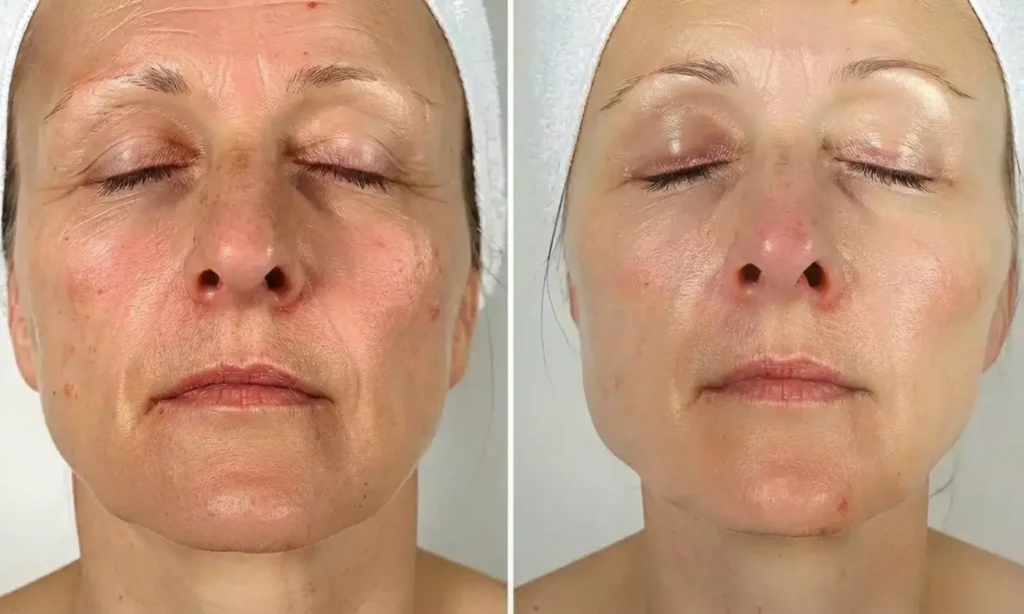
Polynucleotides Before and After Key Differences
Skin texture and tone: Skin becomes smoother and more uniform in tone. The noticeable reduction in dullness is often the first change patients observe, typically from the second session onwards
Fine lines and wrinkles: Gradual softening of fine lines, particularly in the delicate under-eye area and around the mouth. Deeper lines show improvement but are not eliminated
Skin elasticity: Increased firmness as fibroblast activity stimulates new collagen and elastin production. Skin feels more resilient and structured over time
Dark circles: Improvement in dark circles driven by poor skin quality and thin eye area skin tissue. Vascular dark circles respond less to polynucleotides than pigmentation-related ones
Visible scarring: Reduced appearance of acne scarring and uneven texture as skin regenerates and surface irregularities diminish
Natural results: The outcome is consistently described by patients as looking well-rested rather than obviously treated. Because polynucleotides repair skin cell health rather than adding volume, results do not look artificial
Polynucleotides Before and After: Overview
Polynucleotide treatment produces gradual, progressive improvements in skin quality rather than immediate dramatic change. Polynucleotide injections are sometimes referred to as salmon sperm injections, a name that refers to the source of the DNA used in most products. Initial improvements in hydration and radiance are typically visible from 3 to 6 weeks after starting treatment, with full results developing over 2 to 3 months as new collagen and elastin mature. Results typically last 6 to 12 months before maintenance is required. Learn more about and findverified polynucleotide clinics across London, Manchester and Birmingham.
Polynucleotides Before and After: Results Summary
Treatment type: Regenerative injectable biostimulator
Initial improvement: Improved hydration and brightness visible from 2 to 4 weeks
Full results: Develop over 2 to 3 months as new collagen and elastin mature
Results duration: Typically 6 to 12 months depending on age, lifestyle and aftercare
Factors affecting results: Number of sessions completed, skin condition, age, sun exposure, aftercare quality
Sessions typically needed: 2 to 4 sessions spaced 2 to 4 weeks apart for initial course
What Results Can Polynucleotide Treatment Achieve?
Polynucleotide treatment can produce meaningful improvements across a range of skin quality concerns. Because it works by activating the skin’s own biological repair processes, results are driven by your skin’s response to the treatment rather than by a substance sitting in the tissue. This is why results develop progressively over weeks and months rather than appearing immediately after treatment.
The treatment is particularly effective for concerns where the underlying skin structure has been depleted rather than where volume has been lost. Patients treating genuine skin quality issues such as dullness, crepey texture, fine lines, dark circles from thin skin and early acne scarring, consistently achieve the most satisfying results.
Common improvements patients report after polynucleotide treatment include:
- Firmer, more resilient skin texture that feels structurally improved rather than superficially treated
- Significantly improved hydration with a visible reduction in dullness and a more radiant complexion
- Softer fine lines, particularly around the eyes, mouth and forehead
- Reduced appearance of dark circles related to skin thinness and poor tissue quality
- Smoother, less crepey skin around the eyes, neck and décolletage
- More even skin tone and reduced roughness from acne scarring or sun damage
- A consistently rested and refreshed appearance that does not look obviously treated
Polynucleotides Before and After: Under Eyes
The under-eye area is where polynucleotide treatment delivers some of its most appreciated results. The under-eye skin is the thinnest on the face and among the first to show signs of ageing, fatigue and dehydration.
Before treatment, patients typically present with fine lines under the eyes, crepey or papery skin texture, dark circles driven by poor tissue quality, and a generally tired appearance that does not reflect how they actually feel. After a course of polynucleotide treatment, most patients report noticeable improvement in tissue quality, a reduction in dark circles related to skin thinness, and softer fine lines. The skin feels more hydrated and resilient.
It is important to be honest about what polynucleotides can and cannot achieve under the eyes. Significant volume loss, hollow tear troughs and vascular dark circles driven by blood vessel visibility beneath thin skin respond better to tear trough filler or other targeted treatments. Polynucleotides address the skin quality component – the thinness, the crepiness, the poor hydration – not the structural hollowing. A practitioner consultation will clarify which concern applies to you and which treatment is most appropriate.
For a full guide to polynucleotide treatment specifically for the under-eye area, read our dedicated polynucleotides under eyes guide.
Polynucleotides Before and After: Face
On the face, polynucleotide treatment produces a general improvement in skin quality that most patients describe as looking healthier and more refreshed rather than dramatically different. This is one of the treatment’s genuine strengths since results look natural because they are driven by the skin’s own regenerative response.
Before treatment, patients typically present with dull, dehydrated skin that lacks radiance, fine lines across the forehead and around the eyes and mouth, mild skin laxity and loss of elasticity, and an overall texture that feels rough or uneven. After a completed course, the skin typically appears more radiant, feels more hydrated and resilient, fine lines soften progressively, and the overall complexion looks more even and rested.
The face responds well across all treatment zones. The forehead, cheeks, under-eye area and temples all benefit from the fibroblast-activating effect of polynucleotides. Results are cumulative which means each session builds on the improvement from the last.
Polynucleotides Before and After: Neck and Décolletage
The neck and décolletage are among the most popular treatment areas for polynucleotide injections, particularly for patients who have noticed that the skin in these areas has become crepey, lax or uneven in texture before their face shows comparable signs of ageing.
Before treatment, patients typically present with crepey or thin skin texture on the neck and chest, visible fine lines and horizontal neck lines, and an overall texture that looks older than the face. After polynucleotide treatment, the skin in these areas becomes noticeably smoother and better hydrated, fine lines soften and the texture improves.
Results in the neck and décolletage follow the same timeline as the face but patients often report that they notice the improvement in these areas particularly clearly because the skin was more visibly affected before treatment began.
Polynucleotides Before and After: Acne Scarring
Polynucleotide treatment can improve the appearance of acne scarring, particularly post-inflammatory skin changes that affect texture and tone. The mechanism is the same as for general skin quality improvement: fibroblast activation stimulates new collagen production, which gradually improves the texture of scarred skin.
Before treatment, patients with acne scarring typically present with uneven skin texture, post-inflammatory hyperpigmentation, surface irregularities and a complexion that looks uneven or rough. After a course of polynucleotide treatment, most patients notice a gradual improvement in skin texture and a reduction in the visibility of surface-level scarring.
Polynucleotide treatment is not the most aggressive option for acne scarring. For patients with significant atrophic acne scars including boxcar and rolling scars, CO2 laser resurfacing typically produces more dramatic improvement. Polynucleotides are better suited to patients with milder post-acne skin quality concerns, or as a complementary treatment used alongside more intensive resurfacing procedures during the recovery phase.
Results Timeline: What to Expect Week by Week
Understanding the polynucleotide treatment results timeline helps patients manage expectations and avoid the disappointment of expecting faster results than the treatment delivers. The gradual nature of improvement is a feature of the treatment, not a limitation.
Typical Recovery Timeline
Factors That Affect Polynucleotide Before and After Results
The quality and extent of polynucleotide results vary between patients. Understanding what influences outcomes helps set realistic expectations.
Key factors that influence polynucleotide before and after results:
Patient concerns: Patients with genuine skin quality concerns such as dullness, dehydration, crepey texture and fine lines achieve the most satisfying results. Polynucleotides improve skin quality from within. They do not replace volume or address structural concerns. Patients whose primary concern is volume loss or significant skin laxity are better suited to different treatments.
Number of sessions completed: Patients who complete a full course of 3 to 4 sessions consistently report better results than those who have one or two sessions. Each session builds on the last.
Starting skin condition: Patients with moderately depleted skin quality typically see the most noticeable improvement. Very early treatment for prevention and very advanced skin ageing both produce less dramatic visible change.
Age: Younger skin responds more readily to fibroblast stimulation. Older patients still see meaningful improvement but the rate of collagen production slows with age.
Aftercare quality: Consistent SPF use is particularly important. UV exposure actively degrades the collagen being produced during treatment, directly undermining results.
Lifestyle factors: Smoking impairs collagen production and wound healing. Excessive alcohol accelerates skin ageing. Both reduce the quality and longevity of polynucleotide results.
Practitioner technique and product quality: The product used, the injection technique, the placement depth and the session spacing all influence outcomes. This is one of the strongest arguments for choosing a practitioner with specific experience in polynucleotide treatment.
Skin type and hydration: Well-hydrated skin that is not chronically sun-damaged responds better to biostimulatory treatment than very dry, damaged or highly pigmented skin.
Patients who go in with realistic expectations about the gradual timeline consistently report higher satisfaction than those expecting immediate results.
A thorough consultation with a qualified practitioner is the most important step in determining whether polynucleotide treatment is appropriate and what results are realistic for your specific skin concerns and condition.
How Long Do Polynucleotide Results Last?
Results from a completed course of polynucleotide treatment typically last 6 to 12 months before maintenance is required. This is shorter than CO2 laser results but longer than most skin boosters, and the results are genuinely structural rather than superficial.
An important distinction worth understanding: polynucleotide results fade not because the collagen produced disappears, but because the stimulatory effect of the treatment diminishes over time. The new collagen and elastin produced during the course is real structural tissue. Your baseline improves with each course. Patients who maintain treatment every 6 to 9 months consistently report that their skin quality is better year-on-year than before they started treatment.
Typical duration of polynucleotide results by area:
Skin hydration and radiance: Often the first result to appear and the first to fade without maintenance. Typically lasts 6 to 9 months.
Fine line improvement: Lasts 6 to 12 months depending on the depth of lines treated and the number of sessions completed.
Under-eye improvement: The under-eye area has the thinnest skin and tends to show results fading slightly sooner than the rest of the face. Maintenance at 6 months is often recommended for this area specifically.
Acne scarring improvement: The structural improvement in scar tissue is more durable than surface-level skin quality changes. Some improvement may persist beyond 12 months.
Overall skin quality: The cumulative improvement from multiple courses builds over time. Patients who treat consistently for 2 to 3 years report a meaningful baseline improvement compared to when they started.
Polynucleotide Reviews: What Patients Say
Patient reviews of polynucleotide treatment are generally very positive among those who understood the gradual nature of the treatment before starting. Here is an honest summary of what patients consistently report across review platforms including Google and Trustpilot.
What patients love:
- The under-eye results. Reduced dark circles and improved skin quality around the eyes is the most frequently praised outcome, with many patients describing it as the first treatment that made a noticeable difference in this area
- A natural result that looks like better skin rather than a cosmetic procedure. Unlike fillers, nobody can tell what has been done
- Minimal downtime. Most patients return to normal activities within 24 hours
- Cumulative improvement. Each session builds on the last, and patients who maintain treatment report their skin quality improving year on year
Common complaints:
- Patience required. Patients who expected visible results quickly are consistently disappointed. The treatment works over weeks and months, not days
- Cost. A full course of three to four sessions represents a meaningful financial commitment, particularly in London where prices are higher
- Results vary considerably between patients depending on skin condition, age and number of sessions completed
- Some patients note polynucleotides work best as part of a broader skin treatment plan rather than as a standalone treatment. Those with limited budgets may find more visible results from alternatives such as CO2 laser or microneedling
The honest picture: Polynucleotide treatment delivers genuine, structural improvement in skin quality for patients who go in with realistic expectations and complete a full course. Patients who expect dramatic or immediate change are likely to be disappointed. Those who understand the gradual timeline and commit to the full course consistently report high satisfaction.
What Patients Report: Honest Polynucleotide Treatment Reviews
Understanding what patients genuinely report from polynucleotide treatment – including both what works and where expectations need managing – helps prospective patients make an informed decision.
Best results reported
Patients consistently report the strongest results after 3 to 4 sessions, with improvements appearing gradually as the skin regenerates over time. The under-eye area generates the most positive feedback, with many patients reporting that reduced dark circles and improved skin quality under the eyes made a significant difference to how rested and refreshed they appeared.
What patients value most
The natural appearance of results is frequently cited as the treatment’s strongest attribute. Unlike dermal fillers which can look obviously treated if overfilled, polynucleotides produce improvement that looks like better skin rather than a cosmetic procedure. Minimal downtime is also consistently valued as most patients return to normal activities within 24 to 48 hours.
Common considerations
Cost is the most frequently cited drawback in patient reviews. A full course of 3 sessions at a mid-range London clinic typically costs between £900 and £1,800, making it a meaningful financial commitment. Patience is also required, patients who expect immediate results are consistently disappointed, while those who understand and accept the gradual timeline report high satisfaction.
Honest limitations
Polynucleotide treatment does not eliminate deep wrinkles, replace volume, address significant structural ageing or produce the dramatic single-session transformation that treatments like fully ablative CO2 laser can deliver. It is a skin quality treatment as it makes skin healthier, more hydrated and more resilient. Patients who want structural change or immediate volume restoration need different treatments.
Clinical evidence supports these patient reports: a 2024 systematic review in the Journal of Cosmetic Dermatology found polynucleotide injections produced statistically significant improvements in skin texture, elasticity and wrinkle reduction across nine studies covering 219 patients.
Polynucleotide Treatment: Realistic Expectations
Setting realistic expectations before polynucleotide treatment is essential for patient satisfaction. The treatment can produce genuine and meaningful improvement, but it is important to understand both what it can and cannot achieve.
What polynucleotide treatment can achieve:
- Significant improvement in skin hydration, radiance and overall skin quality
- Meaningful softening of fine lines, particularly in the under-eye area
- Reduction in dark circles related to skin quality and thin under-eye tissue
- Improvement in crepey skin texture across the face, neck and décolletage
- Progressive improvement in mild acne scarring and uneven skin texture
- Long-term skin quality improvement with consistent maintenance
What polynucleotide treatment cannot achieve:
- Elimination of deep wrinkles or significant skin laxity. These require different treatments
- Replacement of volume loss. Dermal fillers are appropriate for this
- Immediate visible results. The treatment works progressively over weeks and months
- The same results in all patients. Skin condition, age and number of sessions all influence outcomes
- Permanent results. Maintenance every 6 to 9 months is required to sustain improvement
- Addressing vascular or structural dark circles. These require tear trough filler or other targeted treatment
A thorough consultation with a qualified practitioner is essential to understand what results are realistic for your specific concerns, skin type and the number of sessions you are planning.
How to Find a Trusted Polynucleotide Clinic
The quality of polynucleotide treatment results depends significantly on the practitioner’s experience, the product used and the thoroughness of the consultation and aftercare process. Choosing the right clinic is one of the most important factors in achieving good before and after results.
When choosing a polynucleotide clinic for best results:
- Look for practitioners with specific and extensive experience in polynucleotide treatment. Ask how many treatments they perform each month
- Ensure the clinic uses CE-marked polynucleotide products and can confirm the product being used and why it was chosen
- Choose a clinic that conducts a proper medical consultation including allergy screening, medical history review and realistic expectation setting
- Ask to see real before and after photos of patients treated at the clinic for similar concerns – not generic stock images
- Check statutory registration. General Medical Council (GMC) for doctor-led clinics, General Dental Council (GDC) for dentist-led clinics, or Nursing and Midwifery Council (NMC) for nurse-led clinics
- For non-medically registered practitioners, look for an Ofqual-regulated Level 7 qualification from a JCCP-approved centre and ideally a named medical oversight arrangement for managing any complications
- Look for professional membership of the British College of Aesthetic Medicine (BCAM) for doctor and dentist-led clinics, or the British Association of Medical Aesthetic Nurses (BAMAN) for nurse-led clinics
- Check voluntary Care Quality Commission (CQC) registration. Not mandatory for aesthetic clinics but where voluntarily held it demonstrates an exceptionally high level of clinical governance
- Voluntary accreditation with Save Face, the UK’s only government-approved aesthetics register, or the Joint Council for Cosmetic Practitioners (JCCP) provides further reassurance
- Confirmation that the clinic holds professional indemnity insurance that specifically covers polynucleotide treatment
Every polynucleotide clinic listed on The Aesthetic Standard has been reviewed against these criteria before being listed. We verify practitioner statutory registration for medically-led clinics and BCAM or BAMAN professional membership where held. For non-medically-led clinics we verify Ofqual-regulated Level 7 qualifications from a JCCP-approved centre and JCCP or Save Face accreditation.
For all clinics we confirm professional indemnity insurance covering polynucleotide treatment specifically and voluntary CQC registration where held. We review independent patient feedback across Google and Trustpilot, and speak directly with the lead practitioner at every clinic.
Clinics are led by either statutorily registered medical practitioners or non-medically registered practitioners who meet additional qualification, accreditation and oversight criteria. You can see which applies on each clinic’s profile.
The UK Government is currently developing a licensing scheme for non-surgical cosmetic procedures in England. Under proposals being consulted on, injectable skin booster treatments including polynucleotide injections are expected to fall into the Amber category, which would require non-medically registered practitioners to hold a licence and operate under the oversight of a named regulated healthcare professional. This scheme is not yet law and no start date has been confirmed. The Aesthetic Standard will update its criteria when any new requirements come into force.
Browse our verified polynucleotide clinic listings across London, Manchester and Birmingham.
Before your consultation, read our list of questions to ask at your polynucleotide consultation for guidance on what to ask any aesthetic practitioner about injectable treatments.
Find Polynucleotide Clinics by Location
The Aesthetic Standard has reviewed and verified polynucleotide clinics across major UK cities. Each city guide covers local pricing, how we select clinics in that area and verified practitioners offering polnucleotides:
- Polynucleotide Clinics in London
- Polynucleotide Clinics in Manchester
- Polynucleotide Clinics in Birmingham
For more information about polynucleotide treatment, read our full polynucleotide treatment guide. Browse our full treatments guide or explore our clinic directory to find verified practitioners across the UK.
Polynucleotides Before and After FAQs
When will I see results from polynucleotide treatment?
Most patients notice improved skin hydration and a subtle brightness from the first or second session. Visible improvement in skin texture, fine lines and firmness typically becomes noticeable from 3 to 6 weeks after starting treatment. Full results continue developing for 2 to 3 months after completing the course.
How long do polynucleotide results last?
Results from a completed course typically last 6 to 12 months. Maintenance sessions every 6 to 9 months help sustain and build on results. The collagen produced during treatment represents genuine structural improvement that does not immediately reverse when the stimulatory effect fades.
How many polynucleotide sessions do I need before I see results?
Most patients notice some improvement after the first session, but significant visible improvement is typically seen after the second or third session. A full course of 3 to 4 sessions consistently produces better outcomes than stopping treatment early.
Are polynucleotide results permanent?
No. The stimulatory effect of polynucleotide treatment fades over 6 to 12 months, at which point maintenance treatment is needed to sustain results. However, the collagen and elastin produced during the course is genuine structural tissue, and patients who treat consistently report a meaningful cumulative improvement in skin quality over time.
What do polynucleotides before and after results look like?
Results look like healthier, more hydrated, more radiant skin rather than obviously treated skin. The improvement is natural in appearance because it is driven by the skin’s own repair processes. Before treatment, skin typically appears dull, crepey or dehydrated. After a completed course, skin appears more radiant, feels firmer and better hydrated, fine lines are softer and dark circles may be reduced.
Are polynucleotides worth it based on patient reviews?
Patient reviews consistently rate polynucleotide treatment highly for natural-looking results, minimal downtime and improvements in under-eye skin quality. The most common considerations raised in reviews are the cost of a full course and the patience required. Patients who complete a full course with realistic expectations report high satisfaction. Those expecting dramatic or immediate results are more frequently disappointed.
Do polynucleotides before and after results vary by area?
Yes. The under-eye area and neck tend to show particularly noticeable improvement as these areas have thinner skin and respond well to the regenerative effect of polynucleotides. The face generally shows consistent improvement in hydration and texture. Acne scarring improves gradually over the course of treatment.
Can I see polynucleotide before and after photos before choosing a clinic?
Yes, and you should. Ask to see before and after photos of real patients treated by the same practitioner for similar concerns. Photos should show the same patient at similar lighting and angles. Every clinic listed on The Aesthetic Standard is reviewed for the quality of their patient documentation before being listed.
What affects how good my polynucleotide results will be?
The most significant factors are: number of sessions completed, skin condition before treatment, age, aftercare quality particularly daily SPF use, lifestyle factors including smoking and alcohol, and the practitioner’s technique and product choice.
Is polynucleotide treatment better than Profhilo for before and after results?
Both treatments improve skin quality but through different mechanisms. Polynucleotides activate fibroblasts via DNA fragments to stimulate cellular repair. Profhilo uses concentrated hyaluronic acid to hydrate and stimulate collagen. The right choice depends on individual concerns. Some practitioners use both. A consultation will clarify which is most appropriate for your skin.