Ablative CO2 Laser: Treatment, Recovery & Results
Procedure Length
Recovery Time
Results Visible
Cost Range
In This Guide
Last updated: 11 October 2026
Key Benefits of Ablative CO2 Laser
Most powerful laser resurfacing available: Fully ablative CO2 laser removes the entire outer layer of skin in the treated area, producing more dramatic improvements in a single session than any fractional treatment can achieve.
Significant results from one session: Unlike fractional CO2 laser which often requires 2 to 3 sessions, fully ablative resurfacing typically produces marked improvement from a single treatment, making the total cost and commitment comparable.
Deep wrinkles and severe acne scars: The treatment of choice for deep wrinkles, perioral lines, severe atrophic acne scarring and significant sun damage that has not responded to less intensive treatments.
Powerful skin tightening: The thermal effect causes immediate collagen contraction followed by sustained new collagen production over 6 to 12 months – one of the most effective non-surgical skin tightening options available.
Long-lasting results: Because fully ablative CO2 laser stimulates the formation of entirely new skin and deep collagen remodelling, results are among the most durable of any non-surgical aesthetic procedure. Many patients report sustained improvement for several years.
Ablative CO2 Laser: Overview
Fully ablative CO2 laser is the most intensive form of laser skin resurfacing, removing the entire outer layer of skin in the treated area to produce pronounced improvements in deep wrinkles, severe acne scars and severe sun damage. This guide covers how ablative CO2 laser works, what it treats, recovery time, costs and how to find a verified clinic. Recovery typically takes 10 to 14 days, with results visible from 4 to 6 weeks and continuing to improve over 6 to 12 months. Costs typically range from £1,000 to £3,500 per session with specialist ablative treatment often above this range. Find verified clinics across London, Manchester and Birmingham.
Ablative CO2 Laser Treatment Summary
Treatment type: Fully ablative laser skin resurfacing
Common concerns treated: Deep wrinkles, severe acne scars, heavy sun damage, skin laxity, uneven skin texture, perioral lines
Procedure length: Typically 60–120 minutes depending on the treatment area
Anaesthetic: Local anaesthetic or sedation as topical numbing cream alone is not sufficient for fully ablative treatment
Recovery time: 10–14 days of initial healing, with redness that may persist for several weeks
Results visible: Significant improvement visible from 4–6 weeks, with continued collagen production over 6–12 months
What Is Ablative CO2 Laser Treatment?
Ablative CO2 laser treatment is the most intensive form of laser skin resurfacing, using a carbon dioxide laser to remove the entire outer layer of skin in the treated area. Unlike fractional CO2 laser which treats only a fraction of the skin’s surface at one time, fully ablative CO2 laser treats 100% of the skin in the targeted area by removing damaged cells layer by layer and stimulating new collagen production during the healing process. This makes it particularly effective for deep wrinkles, severe acne scarring, significant sun damage, skin laxity and perioral lines, producing more substantial improvements in a single session than fractional treatment. However, the more intensive nature of the treatment means a longer recovery period of 10 to 14 days or more is required.
Fully ablative CO2 laser is considered an advanced procedure that should only be performed by highly experienced practitioners using surgical-grade laser equipment. It is not offered by all aesthetic clinics and patients should specifically seek out practitioners with a proven track record in ablative resurfacing.
Who Is a Good Candidate for Ablative CO2 Laser?
Fully ablative CO2 laser is best suited to patients with significant skin concerns who want meaningful improvement and are prepared for a more intensive recovery period. It is particularly appropriate for patients who have not achieved satisfactory results from fractional CO2 laser or other less invasive treatments.
Good candidates for fully ablative CO2 laser typically:
- Have deep wrinkles, severe acne scarring, severe sun damage or skin laxity they want to address without surgery
- Have fair to light brown skin tones (Fitzpatrick Types I to III), though Type IV skin (moderate brown skin tones) can be treated by experienced practitioners with adjusted settings and extensive pre-treatment preparation
- Are non-smokers or willing to stop smoking before and during recovery as smoking impairs wound healing and collagen production
- Are in good overall health with no active skin infections or conditions
- Are not taking medications that affect wound healing or immune function
- Have no history of keloid scarring
- Are not currently taking or have recently taken isotretinoin (Roaccutane). Typically a minimum of 6 to 12 months off the medication is required before treatment
- Are not pregnant or breastfeeding
- Can commit to a full 10 to 14 day recovery period with appropriate support at home
- Have realistic expectations and understand that results develop gradually over several months
- Are not prone to cold sores without antiviral medication cover, or are willing to take antiviral prophylaxis as prescribed
Patients who want improvement but cannot commit to the recovery period required for fully ablative treatment may be better suited to fractional CO2 laser resurfacing, which offers meaningful results with a shorter recovery time of 3 to 7 days.
Ablative vs Fractional CO2 Laser: What's the Difference?
Fully ablative and fractional CO2 laser both use carbon dioxide laser technology to resurface the skin and stimulate collagen production, but they differ significantly in the depth of treatment, the recovery required and the results achieved. Understanding the difference helps patients choose the most appropriate treatment for their skin concerns, lifestyle and tolerance for downtime.
Fractional CO2 Laser
- Treats skin in microscopic columns leaving surrounding tissue intact
- Shorter recovery time of 3–7 days
- Lower risk of side effects and complications
- Suitable for mild to moderate skin concerns
- Multiple sessions often needed for optimal results
- Ideal for acne scars, fine lines, enlarged pores, skin texture and mild skin tightening
Fully Ablative CO2 Laser
- Removes entire outer layer of skin in the treated area
- Longer recovery of 10–14 days or more
- More dramatic results in one single-session
- Higher risk profile which requires highly experienced practitioner
- Usually one session produces significant improvement
- Ideal for deep wrinkles, severe sun damage, surgical scars and skin tightening
For a detailed side-by-side comparison of fractional and ablative CO2 laser including recovery time, cost and suitability, see our Fractional vs Fully Ablative CO2 Laser comparison table.
What Can Ablative CO2 Laser Treat?
Fully ablative CO2 laser is particularly effective for skin concerns that require deep resurfacing and significant collagen remodelling. Because the laser removes the entire outer layer of skin in the treated area, it can address more severe and complex skin concerns than fractional treatment in a single session.
Common skin concerns treated with ablative CO2 laser include:
- Deep wrinkles and severe facial lines
- Severe acne scars including boxcar, rolling and ice pick scars
- Perioral lines (smokers lines around the mouth)
- Significant sun damage and photoageing
- Uneven skin texture and rough skin surface
- Surgical scars and hypertrophic scarring
- Skin laxity and crepey skin. Fully ablative CO2 laser is one of the most effective non-surgical skin tightening treatments available. The thermal effect on the dermis causes immediate collagen contraction, with continued improvement in skin firmness over 6 to 12 months as new collagen matures. It is particularly effective for skin laxity around the eyes, mouth and neck
Is Ablative CO2 Laser Safe for All Skin Types?
Fully ablative CO2 laser requires particularly careful patient assessment before treatment, as the more intensive nature of the procedure carries a higher risk of side effects in certain skin types. Patients with darker or olive skin tones have a significantly higher risk of post-inflammatory hyperpigmentation following fully ablative treatment compared to fractional CO2 laser.
Skin type is assessed using the Fitzpatrick scale, which classifies skin from Type I (very fair skin) to Type VI (very dark skin tone). Fully ablative CO2 laser is most commonly recommended for Fitzpatrick Types I to III (fair to light brown skin tones). Experienced practitioners may treat Type IV skin (moderate brown skin tones) with adjusted settings and extensive pre-treatment preparation, but this requires specialist expertise and careful monitoring during recovery.
Patients with darker skin types considering laser resurfacing should seek practitioners with specific experience treating their skin tone. In many cases, fractional CO2 laser resurfacing with conservative settings may be a safer alternative, or a combination approach may be recommended.
During a consultation, a qualified practitioner will assess skin type, medical history and treatment goals to determine whether fully ablative CO2 laser is appropriate or whether an alternative approach would produce better results with lower risk.
For a full list of questions to ask at your consultation, visit our list of questions to ask at your CO2 laser consultation.
Ablative CO2 Laser for Acne Scars
Fully ablative CO2 laser is one of the most effective treatments available for severe acne scarring, particularly for deep atrophic scars (depressed or pitted scars that sit below the surrounding skin surface) including boxcar scars (broad, rectangular depressions with sharp edges), rolling scars (wave-like undulations caused by fibrous bands pulling the skin downward) and ice pick scars (deep, narrow pitted scars extending into the deeper layers of the skin) that have not responded adequately to fractional laser or other treatments.
By removing the entire outer layer of skin and stimulating deep collagen remodelling, fully ablative CO2 laser can produce marked improvements in skin texture and scarring that would typically require multiple fractional sessions to achieve. Because fully ablative resurfacing removes 100% of the skin surface in the treated area, it is particularly effective for patients with widespread acne scarring affecting the overall texture and quality of the skin. The procedure allows the practitioner to precisely control the depth of resurfacing, targeting the deeper layers where scar tissue forms.
Some patients with complex acne scarring benefit from a combination approach. Surgical techniques such as subcision, where a needle is inserted under the skin to release the fibrous bands causing tethered scars, or punch excision, where a small surgical punch removes individual deep scars before closure, may be performed before fully ablative CO2 laser resurfacing to smooth the overall skin surface
During a consultation, the practitioner will assess the depth, type and distribution of scarring to determine whether fully ablative CO2 laser is the most appropriate option, or whether fractional CO2 laser or a combination approach would produce better results for your specific scarring pattern.
Ablative CO2 Laser Before and After
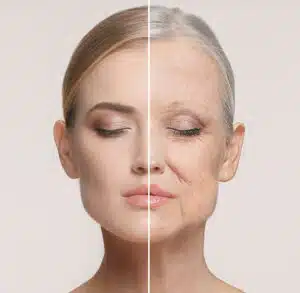
Fully ablative CO2 laser resurfacing can produce some of the most dramatic skin transformation results available from any non-surgical aesthetic procedure. Before treatment, patients typically present with major concerns such as deep wrinkles, severe acne scarring, extensive sun damage, skin laxity or perioral lines. After healing is complete, most patients notice a profound improvement in skin texture, tone and overall quality that continues to develop over several months.
Because fully ablative CO2 laser removes the entire outer layer of skin and stimulates deep collagen remodelling, results are typically more dramatic than those achieved with fractional treatment. Most patients see meaningful improvement from 4 to 6 weeks after treatment, with continued enhancement over 6 to 12 months as new collagen matures beneath the skin surface.
Common improvements seen in ablative CO2 laser before and after results include:
- Significant reduction in deep wrinkles and facial lines
- Dramatic improvement in acne scar texture and depth
- Near elimination of perioral lines in many patients
- Substantially more even skin tone and texture
- Reduced appearance of sun damage and pigmentation
- Visible skin tightening and improved skin laxity
Results from fully ablative CO2 laser are generally long lasting because the procedure stimulates the formation of new skin and collagen. Many patients report sustained improvement for several years following treatment. For patients seeking improvement with shorter downtime, fractional CO2 laser resurfacing may be a more appropriate option.
For a full breakdown of CO2 laser results, timeline and what to expect, read our CO2 Laser Before and After guide.
Ablative CO2 Laser Cost
Fully ablative CO2 laser treatment is typically more expensive than fractional CO2 laser resurfacing, reflecting the higher level of practitioner expertise required, the more intensive nature of the procedure, and the stronger results achieved. In the UK, fully ablative CO2 laser resurfacing typically costs between £1,000 and £3,500 per session. Full face treatment performed by a highly experienced specialist practitioner, particularly in London, will be towards the higher end of this range or above.
Because fully ablative CO2 laser typically produces notable improvement from a single session, the overall cost of treatment may compare favourably with the cumulative cost of multiple fractional CO2 laser sessions required to achieve similar results.
Factors that influence ablative CO2 laser cost include:
- Treatment area size and complexity
- Depth of resurfacing required
- Practitioner expertise and specialist experience
- Type of surgical-grade laser equipment used
- Anaesthetic requirements — local anaesthetic or sedation
- Aftercare products and follow-up appointments
When comparing prices for fully ablative CO2 laser, practitioner expertise should be the primary consideration. This is an advanced procedure that requires considerable specialist experience to perform safely and effectively.
What to Expect on the Day of Ablative CO2 Laser Treatment
Fully ablative CO2 laser is performed as a day procedure. Patients arrive at the clinic, undergo treatment and return home the same day, though advance planning is more important than for fractional treatment given the more intensive nature of the procedure.
Because fully ablative resurfacing removes the entire outer layer of skin in the treated area, topical numbing cream alone is not sufficient. Local anaesthetic or sedation is administered before treatment begins. The practitioner will review your consent form and take photographs of the treatment area before starting. The procedure typically takes 60 to 120 minutes depending on the size of the area being treated.
During treatment patients may feel warmth or pressure but should not feel significant pain due to the anaesthetic. Immediately after treatment the skin will appear raw, red and swollen, more intense than the reaction following fractional treatment. A protective ointment or dressing is applied before you leave, along with detailed aftercare instructions.
Most patients should arrange transport home in advance rather than travelling independently after fully ablative treatment. Recovery begins immediately and the skin will require careful management from the first day.
For the fractional CO2 laser experience on the day, read our Fractional CO2 Laser guide. For a full overview of both treatment types, visit our CO2 laser treatment guide.
Ablative CO2 Laser Recovery and Downtime
Recovery after fully ablative CO2 laser resurfacing is more intensive than fractional treatment and requires careful planning and preparation. Because the laser removes the entire outer layer of skin in the treated area, the healing process takes longer and the visible signs of recovery are more pronounced during the first two weeks.
Patients should plan for a minimum of 10 to 14 days of visible recovery before returning to normal activities. During this period the skin will be red, swollen and raw as it regenerates. Most patients require someone to assist them during the first few days of recovery and should arrange time away from work and social commitments accordingly.
Typical Ablative CO2 Laser Recovery Timeline
Ablative CO2 Laser Aftercare Tips
Aftercare following fully ablative CO2 laser resurfacing is more demanding than fractional treatment and must be followed carefully to support healing, minimise complications and achieve the best possible results.
Practitioners commonly recommend the following aftercare guidelines after fully ablative CO2 laser:
- Keep the skin clean and moisturised using the specific products recommended by your practitioner. Do not use standard skincare products during early recovery
- Apply prescribed ointments or healing balms as directed to keep the skin surface moist and protected during the first week
- Avoid all sun exposure during recovery. The newly regenerated skin is extremely sensitive to UV damage
- Apply a high-SPF sunscreen every day once the skin has healed sufficiently. Sun protection is essential for at least 6 months post-treatment
- Do not pick, scratch or peel the skin under any circumstances during recovery
- Avoid all heat exposure including saunas, steam rooms, hot baths and strenuous exercise for at least two weeks
- Attend all scheduled follow-up appointments. Your practitioner needs to monitor healing closely after fully ablative treatment
- Sleep with your head elevated during the first few days to reduce swelling
- Take any prescribed medications including antivirals and antibiotics exactly as directed
Full recovery from fully ablative CO2 laser requires patience. Most patients see obvious improvement from 4 to 6 weeks, but the skin continues to improve for up to 12 months as collagen remodelling progresses.
Ablative CO2 Laser Risks and Side Effects
Fully ablative CO2 laser carries a higher risk profile than fractional treatment due to the more intensive nature of the procedure. Patients should be fully informed of potential risks and side effects before proceeding and should only undergo fully ablative treatment with a highly experienced practitioner.
Most patients experience significant redness, swelling and skin peeling during the first two weeks of recovery. These effects are a normal and expected part of the healing process following fully ablative resurfacing.
More serious side effects, while uncommon when the procedure is performed correctly, can include prolonged redness lasting several months, infection, changes in skin pigmentation and in rare cases scarring. The risk of complications is significantly higher when fully ablative CO2 laser is performed by inexperienced practitioners or using inadequate equipment.
Possible ablative CO2 laser side effects include:
- Significant redness and swelling during recovery
- Skin crusting and peeling as new skin forms
- Prolonged redness lasting weeks to months
- Post-inflammatory hyperpigmentation particularly in darker skin types
- Hypopigmentation which is a permanent lightening of skin in treated areas
- Infection, though rare, requires immediate medical attention if it occurs
- Reactivation of cold sores, however antiviral medication is usually prescribed preventatively
- Scarring is rare but possible if aftercare is not followed correctly
Choosing a highly qualified and experienced practitioner is essential for fully ablative CO2 laser. A thorough consultation before treatment, including a full skin type assessment and medical history review, is essential. Only undergo fully ablative treatment with a practitioner who has a proven track record in ablative laser surgery and access to surgical-grade equipment.
If you experience any unexpected symptoms following treatment, contact your practitioner promptly.
How to Choose an Ablative CO2 Laser Clinic
Choosing the right clinic for fully ablative CO2 laser is more critical than for most aesthetic procedures. Because fully ablative resurfacing is an intensive procedure with a a longer recovery period and higher risk profile, practitioner expertise and clinic standards are paramount.
Not all aesthetic clinics offer fully ablative CO2 laser, many only offer fractional treatment. Ask specifically how many fully ablative CO2 laser procedures the practitioner performs each year as this is a procedure where volume and experience matter significantly. Ask to see before and after photos of patients treated by the same practitioner for similar concerns, not generic clinic photos.
Ensure the clinic uses surgical-grade CO2 laser equipment capable of true full ablation as not all CO2 laser devices are capable of this. Confirm that antiviral and antibiotic prophylaxis is prescribed as standard before treatment. This is essential for ablative procedures and a mark of a thorough clinical approach.
When choosing an ablative CO2 laser clinic, consider:
- The practitioner’s specific experience and volume of fully ablative CO2 laser procedures performed
- Whether the clinic uses surgical-grade CO2 laser equipment as not all CO2 lasers are capable of true full ablation
- Whether the clinic carries out a thorough consultation including skin type assessment, medical history review and realistic expectation setting
- Whether antiviral and antibiotic prophylaxis is prescribed as standard since this is essential for ablative procedures
- Before-and-after photos of patients treated by the same practitioner for similar concerns
- Clear aftercare protocols and follow-up support throughout recovery
- Professional membership of the British College of Aesthetic Medicine (BCAM) for doctor and dentist-led clinics, or the British Association of Medical Aesthetic Nurses (BAMAN) for nurse-led clinics
- Care Quality Commission (CQC) registration. This is the independent government regulator of health and social care in England. Not currently mandatory for cosmetic laser clinics, but where a clinic voluntarily holds CQC registration this demonstrates an exceptionally high level of clinical governance and patient safety commitment
- Local authority licensing. In London and certain other areas of England, clinics operating CO2 laser equipment are required to hold a Special Treatments Licence issued by their local council. Requirements vary by borough. Ask your clinic whether they hold this licence where it applies in their area.
- Professional indemnity insurance that explicitly covers fully ablative CO2 laser treatments. A general aesthetics policy that does not specifically include high-risk laser treatments is not sufficient
Choosing an experienced, properly credentialled clinic is essential for fully ablative CO2 laser. This is not a procedure where cost alone should drive the decision.
Before booking, prepare for your consultation by reviewing our list of questions to ask at your CO2 laser consultation.
You can verify a practitioner holds current statutory registration: General Medical Council (GMC) for doctor-led clinics, General Dental Council (GDC) for dentist-led clinics, or Nursing and Midwifery Council (NMC) for nurse-led clinics, directly on each regulator’s website. Voluntary accreditation with Save Face, the UK’s only government-approved aesthetics register, or the JCCP provides further reassurance of meeting recognised safety standards.
Every Ablative CO2 laser clinic listed on The Aesthetic Standard has already been verified against these criteria by our editorial team. We verify practitioner statutory registration, professional body membership, professional indemnity insurance covering fully ablative CO2 laser treatments specifically, local authority licensing where required, voluntary CQC registration where held, and patient feedback before any clinic is listed. We review independent patient feedback across Google and Trustpilot. We speak directly with the lead practitioner at every clinic, and where possible we also speak with patients who have undergone treatment there.
The UK Government is currently developing a licensing scheme for non-surgical cosmetic procedures in England. Under proposals being consulted on, fully ablative CO2 laser resurfacing is proposed for the highest risk category, which would restrict it to regulated healthcare professionals operating from CQC-registered premises. This scheme is not yet law and no start date has been confirmed. A further public consultation is expected during 2026. The Aesthetic Standard will update its criteria when any new requirements come into force. In the meantime, we currently only list medically-led clinics for fully ablative CO2 laser given the risk profile of this procedure.
Find Ablative CO2 Laser Clinics by Location
Patients looking for fully ablative CO2 laser treatment can find experienced clinics across major UK cities. Each city guide covers local pricing, how we select clinics in that area and verified practitioners offering ablative CO2 laser resurfacing:
Ablative CO2 Laser Clinics in London
Ablative CO2 Laser Clinics in Manchester
Ablative CO2 Laser Clinics in Birmingham
For patients considering their options, read our comparison of fractional vs ablative CO2 laser or visit our full CO2 laser treatment guide.
For other treatments browse our full treatments guide or explore our clinic directory to find verified practitioners and clinics across the UK
Ablative CO2 Laser FAQs
What is ablative CO2 laser?
Ablative CO2 laser is the most intensive form of laser skin resurfacing, using a carbon dioxide laser to remove the entire outer layer of skin in the treated area. Unlike fractional CO2 laser which treats only a fraction of the skin surface, fully ablative CO2 laser treats 100% of the skin in the targeted area, producing more dramatic results from a single session.
How much does ablative CO2 laser cost?
In the UK, fully ablative CO2 laser typically costs between £1,000 and £3,500 per session depending on the treatment area, practitioner expertise and clinic location. Specialist ablative treatment by leading London practitioners may exceed this range, but because significant results are usually achieved in a single session, the overall cost may compare favourably with multiple fractional CO2 laser sessions.
Is ablative CO2 laser painful?
Fully ablative CO2 laser requires local anaesthetic or sedation — topical numbing cream alone is not sufficient. Most patients experience a sunburn-like sensation after treatment that is managed with prescribed pain relief. Your practitioner will discuss anaesthetic options during consultation.
Does ablative CO2 laser tighten skin?
Fully ablative CO2 laser is one of the most effective non-surgical skin tightening treatments available. The thermal effect on the dermis causes immediate collagen contraction, with continued improvement in skin firmness over 6 to 12 months as new collagen matures. It is particularly effective for skin laxity around the eyes, mouth and neck, and produces significantly more tightening than fractional CO2 laser treatment.
How long is ablative CO2 laser recovery?
Most patients require 10 to 14 days of recovery before returning to normal activities. Redness may persist for several weeks beyond this as the new skin continues to mature. Full results develop over 6 to 12 months as collagen remodelling progresses.
How many ablative CO2 laser sessions are needed?
Most patients achieve significant improvement from a single fully ablative CO2 laser session. Some patients with very severe scarring or sun damage may benefit from a second session after allowing full healing and collagen remodelling to complete, typically 12 months later.
What is the difference between ablative and fractional CO2 laser?
Fully ablative CO2 laser removes the entire outer layer of skin in the treated area, producing more dramatic results but requiring 10 to 14 days recovery. Fractional CO2 laser treats only a fraction of the skin surface at one time, leaving surrounding tissue intact for faster healing of 3 to 7 days, but typically requires more sessions for comparable results.
Is ablative CO2 laser safe for darker skin?
Fully ablative CO2 laser carries a higher risk of post-inflammatory hyperpigmentation in darker skin types and is generally most appropriate for Fitzpatrick Types I to III. Patients with darker skin tones should seek practitioners with specific experience treating their skin type and may be better suited to fractional CO2 laser with conservative settings.
How long do ablative CO2 laser results last?
Results from fully ablative CO2 laser resurfacing are among the longest lasting of any non-surgical skin treatment. Because the procedure stimulates the formation of entirely new skin and significant collagen production, many patients report sustained improvement for several years. Ongoing sun protection and skincare are essential to maintain results.